In this guide
The best motorized blinds should solve a daily annoyance: slats you never adjust, a window behind the sofa, or a bedroom that needs privacy before you turn on the lights. Start with what needs to move, then choose the controls.
Our starting point: consider SwitchBot Blind Tilt to automate existing compatible slats, Lutron Serena for wood blinds in a Caséta home, and a lifting shade if you need the window covering to rise completely. The six picks below cover these different jobs.
US products and manufacturer sources checked September 8, 2026. These are research-based editorial recommendations; we have not performed comparative motor or battery tests. How we chose.
Compare the best motorized blinds and shades
Blinds have adjustable slats; shades use fabric that rolls or folds. Retailers often use the names interchangeably. Three picks below only automate slat tilt. The other three raise and lower the covering.
On a small screen, swipe the table to see every column.
| Pick | Type and movement | Price reference | Start here for |
|---|---|---|---|
| SwitchBot Blind Tilt | Retrofit motor. Slat tilt only; lifting stays manual. | $69.99 listed for one Blind Tilt; hub and remote cost extra. | retrofit for existing slatted blinds |
| Lutron Serena Smart Wood Blinds | Complete wood blind. Motorized tilt; cordless manual lift. | $699 manufacturer starting example for a 3′ × 5′ window; final configuration varies. | wood blinds for a Caséta home |
| Hunter Douglas Parkland | Complete wood blind. PowerView motorizes tilt only; lift remains manual. | Custom dealer quote with PowerView Gen 3 specified. | wood blinds for a dealer-led project |
| SmartWings Nowa Cellular Shades | Custom cellular shade. Motorized raise and lower. | Online configured price; dimensions, fabric and motor affect the total. | cellular option for choosing your smart-home system |
| Norman Soluna Roller Shades | Custom roller shade. Motorized raise and lower. | Retailer quote including motorization and LightGuard 360 if selected. | shortlist choice for bedroom light gaps |
| SwitchBot Roller Shade | Complete roller shade. Motorized raise and lower. | From $199.99 for the small model; size and accessories change the total. | adjustable-width budget shade |





Shopping only for rollers? Our six-brand motorized roller shades comparison goes further into Lutron, Hunter Douglas, Norman, Graber, SmartWings and Graywind.
SwitchBot Blind Tilt
Best retrofit for existing slatted blinds
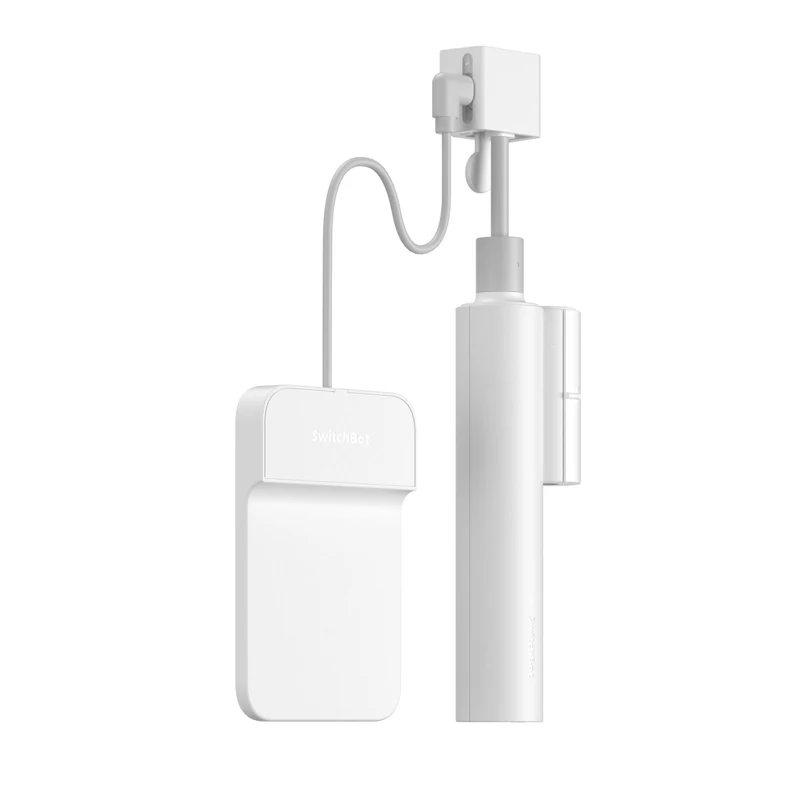
Start here if you already like your horizontal blinds and mainly want to angle the slats for morning light or evening privacy. Keeping the existing covering makes this a smaller first project than replacing a whole window treatment.
- What moves
- Slat tilt only; lifting stays manual.
- Price basis
- $69.99 listed for one Blind Tilt; hub and remote cost extra.
- Controls
- Nearby Bluetooth app and timers; optional remote. Compatible SwitchBot hub for away access and integrations.
- Power
- Rechargeable battery; solar panel included.
Blind Tilt attaches to a compatible tilt wand. It does not pull lift cords, operate vertical blinds or raise the stack of slats. Check the manufacturer’s wand measurements and space beneath any valance before ordering.
Consider before buying: The motor remains visible, and an awkward-to-reach blind still needs manual lifting. A retrofit also leaves any existing lift cords in place.
Warranty to check: One-year product warranty.
Official sources: Blind Tilt, fit and current price · Matter bridge compatibility.
Lutron Serena Smart Wood Blinds
Best wood blinds for a Caséta home
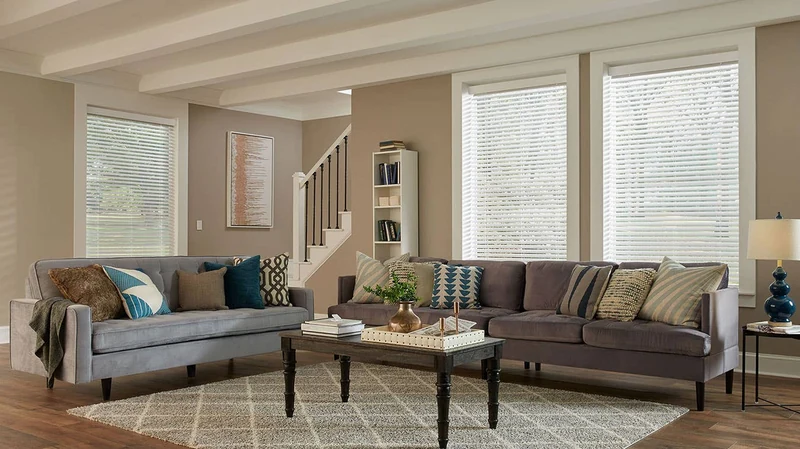
Serena is our first wood-blind shortlist choice for a home already using Lutron Caséta lighting. Sharing the control system makes a routine that dims lights and adjusts the slats easier to plan.
- What moves
- Motorized tilt; cordless manual lift.
- Price basis
- $699 manufacturer starting example for a 3′ × 5′ window; final configuration varies.
- Controls
- Compatible Lutron remote; Smart Hub for app, schedules and supported voice platforms.
- Power
- Replaceable batteries or a wired configuration.
These are real 2-inch wood slats with automated tilt and manual raising. Lutron also offers Natural Light Optimization, which adjusts slat angles with the sun’s position when used with its Smart Hub. Request finish samples and a configured price including the remote, hub and power supply.
Consider before buying: Do not choose this model for a high window you need to lift remotely. Serena roller or honeycomb shades provide automated raise/lower control instead.
Warranty to check: Eight-year limited window-system coverage, with reduced parts credit after year five. Accessories have separate terms; on-site labor is excluded.
Official sources: Wood blinds and reference pricing · Movement and power options · Serena brochure (PDF) · Warranty (PDF).
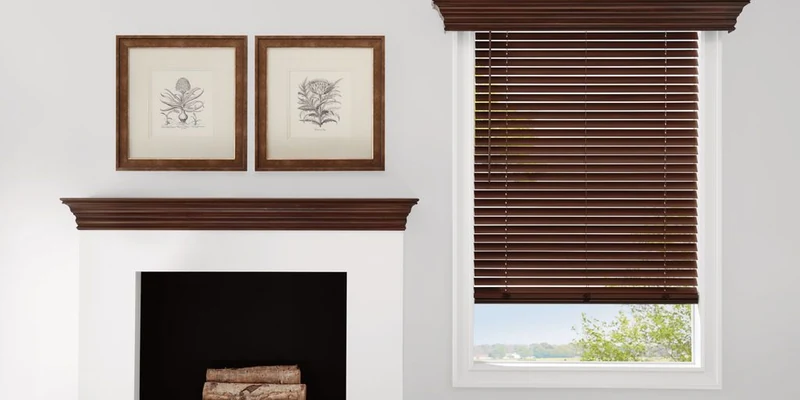
Hunter Douglas Parkland
Best wood blinds for a dealer-led project
Choose Parkland when selecting finishes, checking window clearance and arranging installation are as important as choosing a motor. A dealer can put measurement and setup in the same quote, which is useful for a room with several different windows.
- What moves
- PowerView motorizes tilt only; lift remains manual.
- Price basis
- Custom dealer quote with PowerView Gen 3 specified.
- Controls
- Local PowerView app or remote; Gateway for away access and supported smart-home integrations.
- Power
- Have the dealer specify the compatible supply and access for battery service.
Parkland offers wood slats in 2-inch and 2½-inch sizes. Specify PowerView Gen 3 if you want the current control platform. Its local app connection uses Bluetooth; the Gateway adds functions such as away-from-home access. Ask the dealer to demonstrate the exact lift and tilt operation you are ordering.
Consider before buying: Premium custom blinds still do not provide motorized lifting in this configuration. Compare a fully specified quote with Serena rather than assuming either brand has one standard price.
Warranty to check: Five-year limited coverage for motorized components for the original owner; other components and service costs have separate terms.
Official sources: Parkland range · Tilt-only motorization · Gen 3 local controls · Gateway functions · Motor warranty.
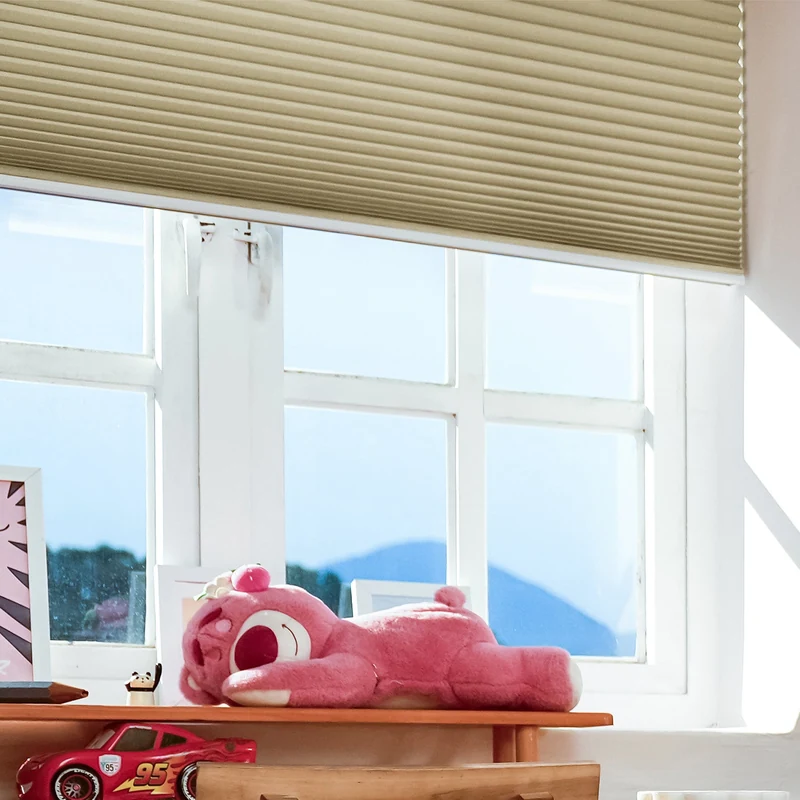
SmartWings Nowa Cellular Shades
Best cellular option for choosing your smart-home system
Nowa is the option to compare when you prefer a pleated honeycomb covering to wood slats or a flat roller. It also gives you a choice of motor protocols, useful when the shade needs to fit a smart-home system you already own.
- What moves
- Motorized raise and lower.
- Price basis
- Online configured price; dimensions, fabric and motor affect the total.
- Controls
- Select the motor when ordering. Matter over Thread requires a Matter controller and Thread border router.
- Power
- Built-in rechargeable battery, USB-C charging and optional solar charging.
The Nowa range includes blackout and light-filtering versions. The product documentation lists Matter over Thread, Zigbee and Z-Wave motor options; each has different controller requirements. Decide on the motor before comparing prices, then order fabric samples and follow the measuring instructions for that configuration.
Consider before buying: Custom sizing puts more responsibility on the buyer. Choosing the wrong motor can leave you buying another hub, and a fabric labelled blackout can still admit light around its edges.
Warranty to check: Three years for motors and controls under the current policy. Custom-order returns generally exclude customer measurement errors and preference changes.
Official sources: Blackout Nowa specifications · Light-filtering Nowa · Matter requirements · Warranty and custom orders.
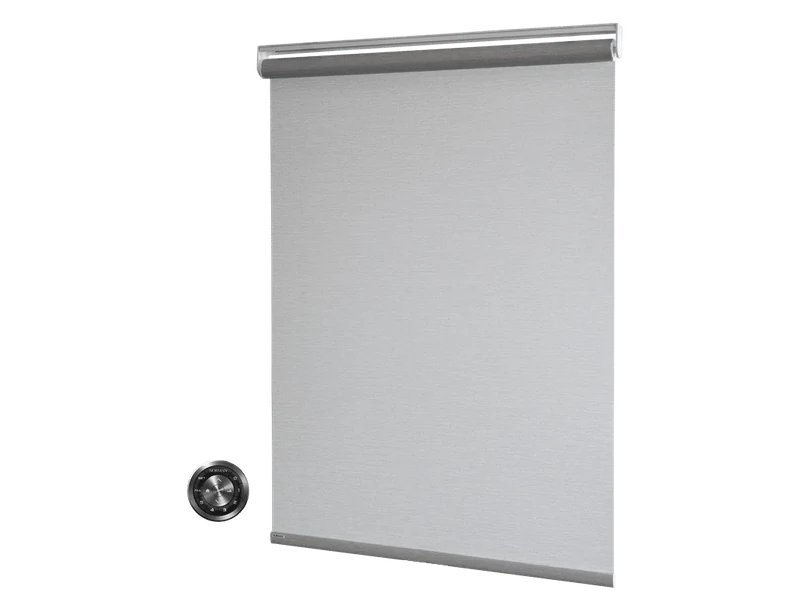
Norman Soluna Roller Shades
Best shortlist choice for bedroom light gaps
Norman deserves a place here because the fabric and the fit can matter more than the app in a bedroom. Soluna’s optional LightGuard 360 addresses light around the shade with an upper housing plus side and bottom channels.
- What moves
- Motorized raise and lower.
- Price basis
- Retailer quote including motorization and LightGuard 360 if selected.
- Controls
- Compatible remote; connected Norman Smart Motorization uses the ShadeAuto Hub/app.
- Power
- Rechargeable battery, plug-in or DC configuration; confirm the exact motor.
Ask for a quote that names the blackout fabric, LightGuard components and motor system separately. Connected Norman Smart Motorization can add schedules and supported voice control through ShadeAuto. The compatible remote is also needed for pairing and configuration.
Consider before buying: A standard Soluna roller does not automatically include the full light-blocking system. Channel-equipped alternatives also exist, so compare the installed configuration rather than treating a brand name as a blackout guarantee.
See when Norman Soluna is a better bedroom-blackout choice and which competitors offer similar light-control options.
Warranty to check: Five years for motorized components, excluding batteries; labor and other exclusions apply.
Official sources: Soluna Roller Shades · Blackout and LightGuard options · Motorization reference (PDF) · Warranty.
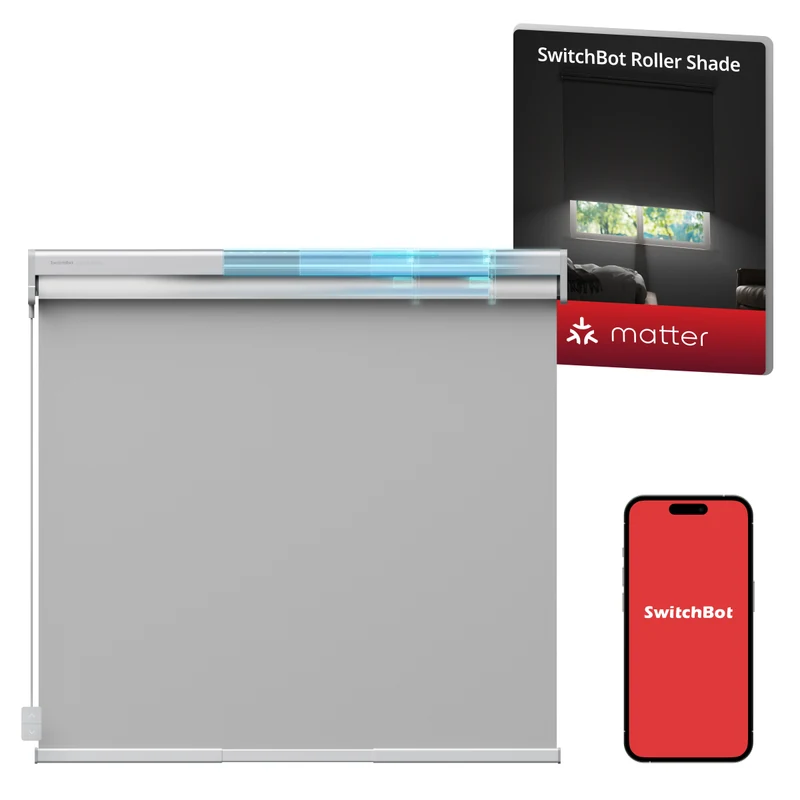
SwitchBot Roller Shade
Best adjustable-width budget shade
This is a complete fabric shade for someone replacing a window covering on a tighter budget. The adjustable-width approach can suit a window that falls between common ready-made sizes, without a custom fabric order.
- What moves
- Motorized raise and lower.
- Price basis
- From $199.99 for the small model; size and accessories change the total.
- Controls
- App and wired controller; optional remote. Compatible SwitchBot hub for connected features.
- Power
- Rechargeable battery; optional solar panel.
SwitchBot offers four width bands covering 22.8–72.8 inches overall, with gray or white fabric. Choose the correct band and check the drop as well as the width. Adjusting the roller and trimming the fabric require following the installation guide carefully.
Consider before buying: The limited finishes and cutting step will not suit every room or buyer. This product raises fabric; it is a separate product from Blind Tilt, not an attachment that lifts your existing slatted blinds.
Warranty to check: One-year product warranty.
Official sources: Roller Shade, sizes and price · Matter bridge compatibility.
Electric blinds, automatic blinds and smart blinds: what changes?
The labels describe different parts of the experience. A motor does not automatically give you an app, a schedule or voice control.
- Motorized blinds / electric blinds
- A motor moves the covering or tilts its slats. “Electric” can mean battery-powered; it does not necessarily mean mains wiring.
- Remote control blinds / remote blinds
- A handheld or wall-mounted controller operates the motor. Check whether the remote is included and whether it can control each window and the whole room.
- Automatic blinds
- Schedules or supported triggers move the covering for you. Confirm where routines run and whether a hub, sensor or internet connection is required.
- Smart blinds / smart shades
- App or smart-home integration adds connected controls. The exact motor, bridge and home platform determine which functions are available.
For a guest bedroom, a labelled remote may be the most useful control. For a living room with connected lighting, one evening scene that adjusts both can be worth the extra setup. Choose the routine you want before buying the hardware to support it.
Remote control blinds or a connected smart-home system?
Keep a physical control in the room. Visitors should be able to open a shade without borrowing your phone. Request a demonstration of individual control, room groups and the stop or favorite-position button.
Match the motor to your home platform. On the SwitchBot products here, Matter works through a compatible SwitchBot bridge; it is not native Matter over Thread. The SmartWings Matter motor uses Thread and needs both a Matter controller and Thread border router. A compatible home hub may provide both functions. See the SwitchBot compatibility list and SmartWings setup requirements.
Separate local control from away access. A nearby remote or Bluetooth connection and a command sent from outside the home take different routes. Ask what still works when the internet is down, including schedules. Do not assume every voice assistant or routine works offline.
New to the terms? Read our Matter and Thread guide before paying for a different motor or another hub.
Choosing automatic blinds for windows in each room
Bedrooms: specify light control before the motor
Slats let you direct daylight, but their openings and perimeter gaps are a poor starting point for a room-darkening priority. Compare blackout shades with attention to the installed side, top and bottom gaps. If morning light is the main problem, get the channel or overlap details in writing. Norman’s configured LightGuard option is one route, not the only one.
Living rooms and offices: preserve useful daylight
A tilting blind can angle light without raising the whole covering. That makes wood blinds or a compatible retrofit worth considering when you want to reduce screen glare while retaining some daylight. Test a sample from the actual desk or sofa position, including how it looks from outside after dark.
High windows: confirm full lifting and accessible power
For a window over a stairwell, motorized tilt alone may leave the original problem unsolved. Choose a covering with motorized raise/lower operation if you need it fully open. Plan how someone will reach the charging port or battery compartment; a suitable wired supply may be more practical.
Kitchens and bathrooms: match materials to the room
Ask the manufacturer whether the fabric, slats and motor suit the expected moisture and cleaning. Do not assume a wood-blind recommendation transfers to a humid bathroom. Handles, taps and opening windows also need clearance throughout the covering’s travel.
Power, measuring and the complete cost
Choose power around access. Rechargeable motors avoid running a cable to every window, but still need charging. Replaceable batteries need physical access too. Solar accessories can reduce charging visits when the panel receives suitable light; they do not guarantee maintenance-free operation. Wired systems need a planned power route.
Measure for the exact product. Record width, height, recess depth, mounting surface and any handles or obstructions. Then follow that manufacturer’s inside- or outside-mount instructions. Do not apply a universal width deduction: some manufacturers make the allowance themselves. Check custom-order change and return terms before paying.
Compare the same finished job. A retrofit motor price and a complete custom shade quote cover different things. Use the listed examples above as reference points, then request one itemized total:
- Covering, dimensions, fabric or finish, and motor model.
- Battery or wired supply, charger and optional solar panel.
- Remote, hub or gateway, and smart-home setup.
- Cassette, light-blocking channels, brackets and other mounting hardware.
- Measuring, fitting, delivery, tax and service arrangements.
Our motorized blinds cost guide helps plan the wider project. For an uncertain fit or an unfamiliar control system, start with one representative window before placing a whole-house order.
How we selected these picks
We compared documented movement, fit requirements, light-control options, power, controllers, buying support, price transparency and warranty terms. The result includes a retrofit, two complete wood blinds, a cellular shade and two rollers. “Best for” labels are our editorial judgments about specific needs, not measured overall rankings.
We have not installed every product or independently compared motor noise, battery runtime, long-term reliability or energy savings. If sound is a deciding factor, ask to hear the exact motor, covering and window size you plan to order.
Why IKEA is no longer a pick: when checked on September 8, 2026, IKEA’s US electric-blinds category had no products in the range. We have removed its older models from this current US shortlist; that is not a claim about permanent discontinuation or availability in every country.
For more complete roller systems, including Graber and Graywind, use the dedicated roller-shade guide. Sources sit beside each pick; manufacturer images show the named product families, with configuration differences noted in captions. Read our research methodology and commercial disclosure.
Frequently asked questions
What are the best motorized blinds for existing windows?
For compatible horizontal blinds with a tilt wand, SwitchBot Blind Tilt is our retrofit starting point. It automates slat angles, not lifting. If you need the covering to rise, compare complete motorized shades and check mounting depth, window dimensions and charging access.
Are electric blinds the same as smart blinds?
Electric blinds use a motor, which can run on batteries or a wired supply. Smart blinds add app or smart-home functions, sometimes through a separate hub. A remote-operated motor does not by itself guarantee schedules, voice control or away access.
Can remote control blinds work without Wi-Fi?
Yes, compatible direct remotes and nearby Bluetooth controls can operate without Wi-Fi. That does not mean every app, schedule or voice feature works offline. Confirm the controls and outage behavior for your exact motor and hub.
Do motorized blinds raise and lower automatically?
Some do, but tilt-only models do not. SwitchBot Blind Tilt, Lutron Serena Smart Wood Blinds and Hunter Douglas Parkland with PowerView automate the angle of the slats while leaving lifting manual. The complete roller and cellular shades in this guide provide motorized raise/lower movement.
How much do automatic blinds cost?
Budget for the complete configuration: covering or retrofit, motor, power supply, controls and fitting. The shortlist includes current manufacturer price examples, but custom sizes and accessories change the total. Get an itemized quote for each window rather than multiplying a headline starting price.
Are motorized shades worth it for renters?
They can be useful if the fit and installation suit the lease. A compatible retrofit may let you retain existing blinds, but check permission for adhesives, drilling or changes to fixtures. A custom shade may not fit the next home, and a tilt retrofit still leaves manual lifting.
Which smart shades work with Apple Home, Alexa or Google Home?
Compatibility depends on the motor and bridge, not just the fabric brand. For example, SmartWings offers Matter over Thread motors, while the SwitchBot products here use Matter through a compatible SwitchBot hub. Check the official setup requirements linked beside each pick for your specific platform.