In this guide
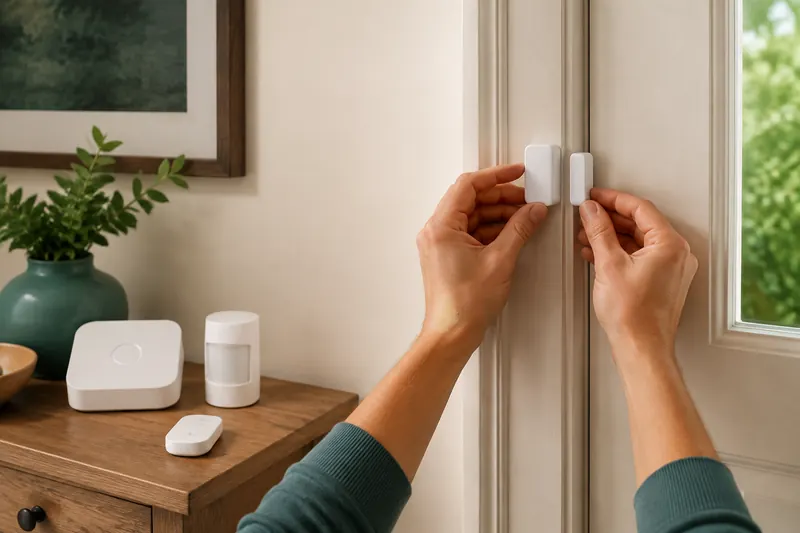
The honest starting point: most smart home devices do not need a professional. Adhesive sensors, smart plugs, battery cameras and retrofit locks are genuinely DIY, and paying someone to fit them is wasted money.
But a meaningful minority of jobs involve mains electricity, running cable through finished walls, or work you want warranted. Those are worth paying for, and this page covers what they cost.
Typical professional rates
| Job | Typical cost | DIY viable? |
|---|---|---|
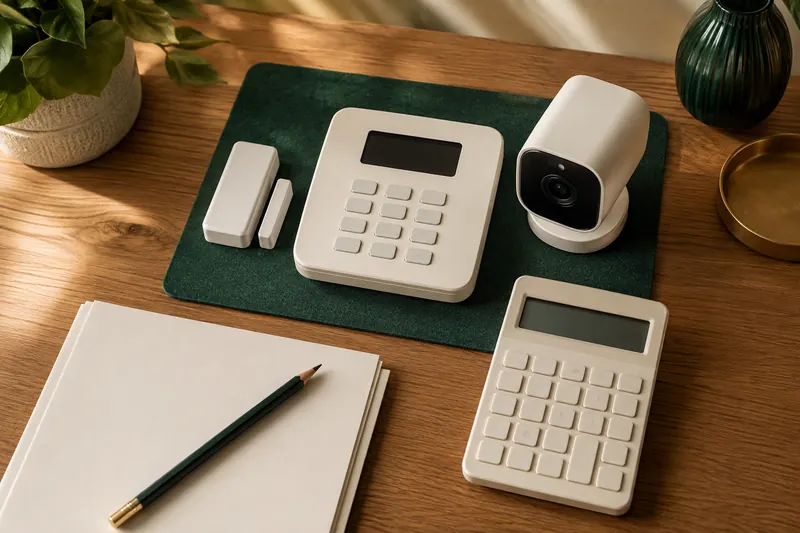
| Security system setup (wireless) | $100–$300 | Yes — about an hour |
| Video doorbell, existing wiring | $100–$200 | Yes, if voltage is adequate |
| Video doorbell, new wiring or transformer | $180–$400 | Only with electrical experience |
| Wired camera, per camera | $150–$400 | Rarely — cable through walls |
| Smart switch or dimmer, per switch | $75–$150 | Only if confident with mains |
| Smart thermostat, C-wire present | $100–$200 | Yes |
| Smart thermostat, C-wire needed | $200–$400 | Sometimes, with the extender kit |
| Smart lock (retrofit) | $75–$150 | Yes — 20 minutes |
| Motorised shade, per window | $100–$250 fitting | Ready-made yes; made-to-measure no |
| Whole-home system design and install | $1,500–$6,000+ | No |
Which jobs genuinely need a professional
Five categories. If your project is not in one of them, you can almost certainly do it yourself.
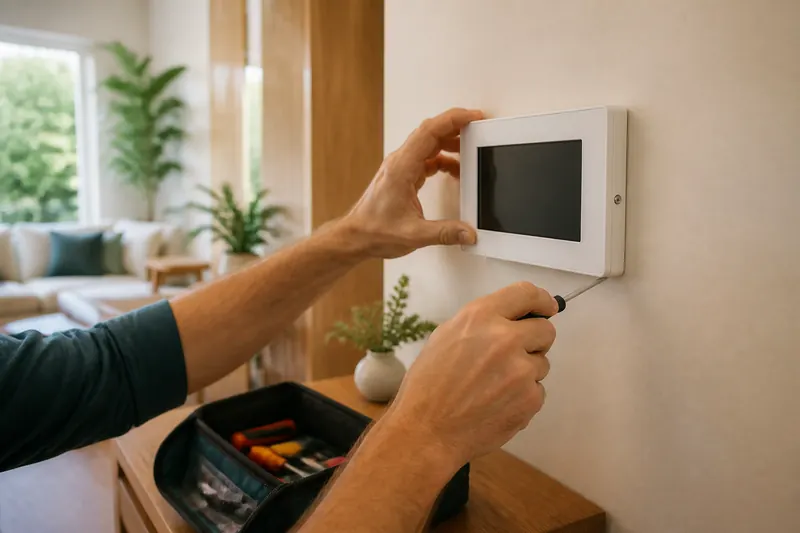
1. Anything on a mains circuit. Smart switches, hardwired cameras, powered floodlights, doorbell transformers. Getting this wrong risks fire, not just inconvenience — and in many jurisdictions it must be certified.
2. Cable through finished walls. Fishing PoE cable through insulated cavities, drilling external penetrations that must stay weatherproof for twenty years, and terminating connectors properly.
3. Large properties. Beyond roughly 2,500 sq ft, wireless coverage stops being automatic. Someone needs to plan repeater placement and account for what your walls are made of.
4. Made-to-measure window treatments. Measuring errors are not returnable, and motorised rollers need more recess depth than manual ones.
5. Integrating with existing systems. Legacy alarm wiring, structured cabling, multi-zone HVAC, AV integration.
What a good quote contains
Vague quotes are where disputes begin. A proper one specifies:
- Itemised equipment — model numbers, not “security package”.
- Labour separated from equipment, so you can compare like with like.
- Who owns the equipment at the end. Leased hardware ties you to that provider.
- What happens to existing hardware — removed, reused, made good.
- Warranty terms on both parts and labour, with durations.
- Any recurring costs and what they become after a promotional period.
- Licensing and insurance details, which you should verify independently.
Get at least two quotes for anything over about $1,000. The spread between installers for identical work is frequently 30–40%.
Questions worth asking an installer
These separate a competent installer from a salesperson.
“Are you licensed and insured, and can I see the certificate?” A professional produces it without hesitation.
“Which brands do you carry, and are you tied to any?” Exclusive dealers recommend what they sell. That is not dishonest, but you should know.
“What happens if a device fails in eighteen months?” The answer tells you whether they intend to be around.
“Will you show me how to change this myself?” Good installers hand over knowledge. Ones who make the system deliberately opaque are creating future callouts.
“Can I own the equipment outright?” If the answer is no, understand exactly what you are locked into.
Realistic whole-home budgets
| Project | Equipment | Installation | Total |
|---|---|---|---|
| Security + doorbell, 3-bed home | $400–$700 | $150–$400 | $550–$1,100 |
| Add 4 wired cameras | $500–$1,200 | $600–$1,600 | $1,100–$2,800 |
| Lighting control, 10 switches | $600–$1,000 | $750–$1,500 | $1,350–$2,500 |
| Motorised shades, 6 windows | $1,800–$6,000 | $600–$1,500 | $2,400–$7,500 |
| Full integrated smart home | $4,000–$12,000 | $2,000–$6,000 | $6,000–$18,000 |
Phasing is usually the right approach. Security and a doorbell first, lighting later, shades last — each phase is independently useful, and you learn what you actually want before committing to the expensive parts.
Frequently asked questions
How much does smart home installation cost?
Labour typically runs $75–$150 an hour. A security system setup is $100–$300; wired cameras $150–$400 each; a whole-home system $1,500–$6,000 or more in labour.
Do I need a professional to install a smart home?
Usually not. Adhesive sensors, smart plugs, battery cameras and retrofit locks are genuinely DIY. Pay a professional for mains wiring, cable through finished walls, large properties and made-to-measure shades.
How much does it cost to install a security camera?
$150–$400 per wired camera, depending on cable run difficulty. Battery cameras need no installation at all.
Should I get multiple quotes?
Yes, for anything over about $1,000. The spread between installers for identical work is frequently 30–40%.