In this guide
Smart thermostats are among the few smart home devices that can genuinely pay for themselves. But which one you should buy depends entirely on which problem you actually have — and most buying guides never ask.
| Pick | Best for | Score | Room sensors | Apple Home |
|---|---|---|---|---|
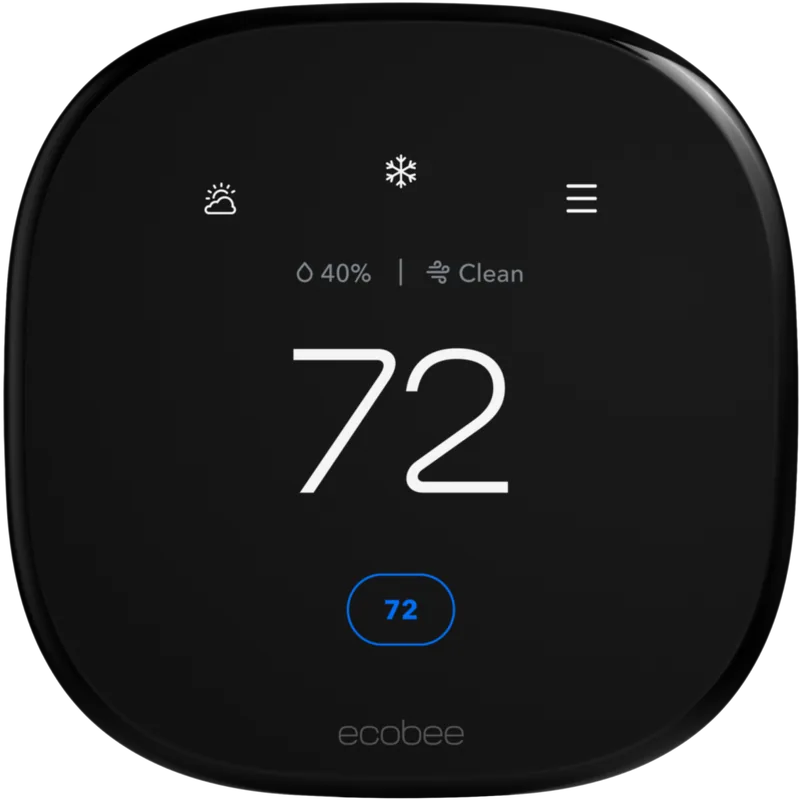
| ecobee | Best overall | 4.4/5 | Yes | Yes |
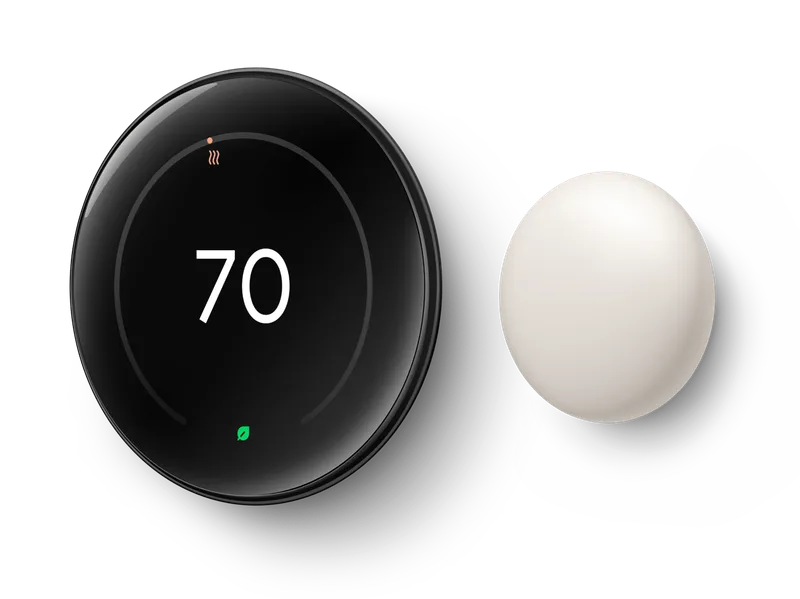
| Google Nest | Best learning behaviour | 4.1/5 | No | No |


1. ecobee — Best overall
Why it wins: Remote room sensors let it heat the rooms you occupy rather than the hallway where the thermostat happens to hang.
Every conventional thermostat measures one point, usually the least representative spot in the house. ecobee’s sensors move that measurement into the bedrooms and living spaces that matter, and let you prioritise by time of day.
It also has the broadest platform support in the category — Apple Home, Alexa, Google, SmartThings and Matter — with Alexa built into higher models.
What we like
- Room sensors genuinely fix uneven heating
- Broadest platform support, including Apple Home
- Alexa built into higher-end models
What to watch
- Usually needs a C-wire or the included extender
- More expensive than basic models
- Interface has more depth than some want
2. Google Nest — Best learning behaviour
Why it wins: It builds a schedule by watching how you live, so an irregular household stops heating an empty house without anyone programming anything.
If your problem is waste rather than comfort — heating a house nobody is in, a schedule that no longer matches your life — Nest is the better answer. It learns and adjusts without configuration.
The physical dial also remains the most pleasant thermostat interface anyone has made, which counts for something on a device you touch daily.
What we like
- Best-in-class learning and presence sensing
- The best physical interface in the category
- Excellent inside Google Home
What to watch
- No room sensors
- No native Apple Home support
- Google’s record on retiring hardware
Which problem do you have?
Answer this and the choice is made.
“The heating runs when nobody is home.” You want learning and presence detection. Buy Nest.
“The back bedroom is always freezing.” You want room sensors. Buy ecobee. Nothing Nest does will fix this.
“I use Apple Home.” Buy ecobee. Nest has no native support.
“Both problems.” ecobee, because room sensors also solve waste indirectly: people with a cold bedroom overheat the whole house to compensate, and fixing the room stops that.
The C-wire question, answered properly
Smart thermostats need continuous power, which usually means a C-wire (common wire). Many older US homes do not have one, and this is the most common installation obstacle.
How to check: switch off the power at the breaker, remove the thermostat faceplate, and photograph the terminal block. You are looking for a wire in a terminal marked C. Thirty seconds, and it tells you everything.
If you have no C-wire: ecobee includes a Power Extender Kit that borrows a wire at the furnace or air handler. It works in most systems and is well within reach of a confident DIYer. Otherwise, an HVAC technician or electrician can run a C-wire, typically a modest job.
Do they actually save money?
Be sceptical of specific percentages from any vendor — savings depend heavily on your starting point.
Large savings are likely if you currently hold one temperature all winter, have no programmable schedule, or have an irregular occupancy pattern the current schedule does not match.
Modest savings are likely if you already run a well-tuned programmable thermostat and keep a regular routine. The improvement is real but small.
The comfort improvement from room sensors is easier to notice than the bill reduction, and for most households it is the better reason to buy.
Frequently asked questions
Which smart thermostat is best?
ecobee for most homes, because room sensors fix uneven temperatures and it supports Apple Home. Nest if your main problem is heating an empty house.
Do I need a C-wire?
Usually. ecobee includes a Power Extender Kit for homes without one. Photograph your thermostat wiring before ordering to find out where you stand.
How much can a smart thermostat save?
It depends on your starting point. Large gains if you currently hold one temperature all winter; modest gains if you already run a well-tuned schedule. Treat precise vendor percentages with caution.
Does Nest work with Apple Home?
Not natively. Choose ecobee if you use Apple Home.