In this guide
What we like
- Room sensors let compatible thermostats use readings from selected rooms
- Compatible models support Apple Home, Alexa, Google and SmartThings
- Alexa is built into the higher-end models
- Includes a built-in air-quality monitor on current flagships
What to watch
- Usually needs a C-wire, or the included power extender
- More expensive than a basic programmable thermostat
- Interface has more depth than some people want
- Security add-on is minor next to a real alarm system
Room sensors solve a real problem
Here is the flaw in every conventional thermostat, smart or not: it measures temperature where it is mounted, which is usually a hallway. Hallways are not where people live. So the hallway reaches 21 °C, the system stops, and the north-facing bedroom stays at 17 °C indefinitely.
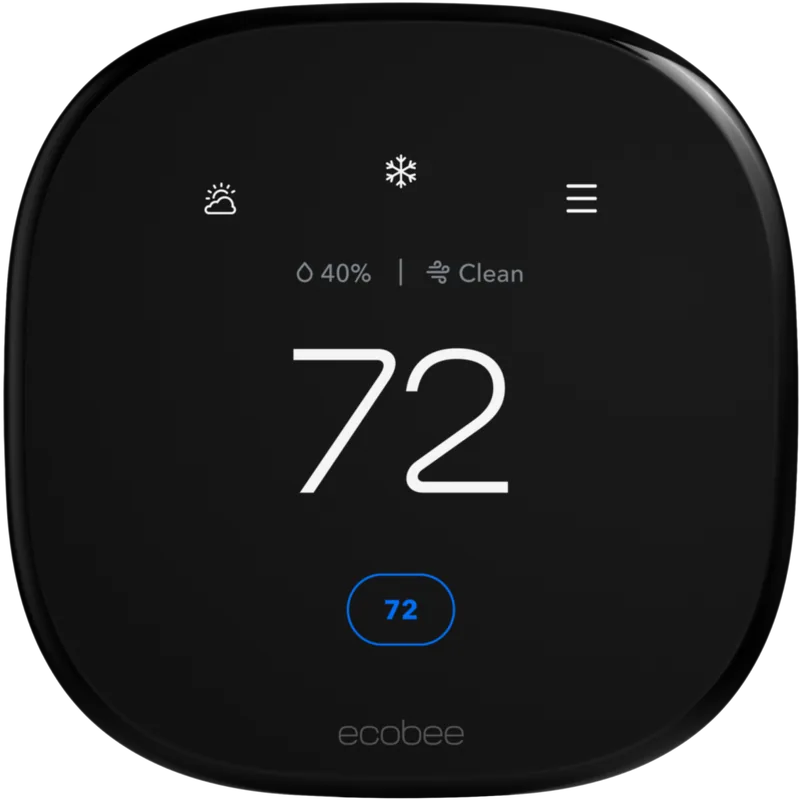
Smart Thermostat Premium includes a SmartSensor that measures room temperature and occupancy. Its Follow Me feature uses occupancy to help prioritize rooms in use; sensor inclusion varies across other ecobee models.
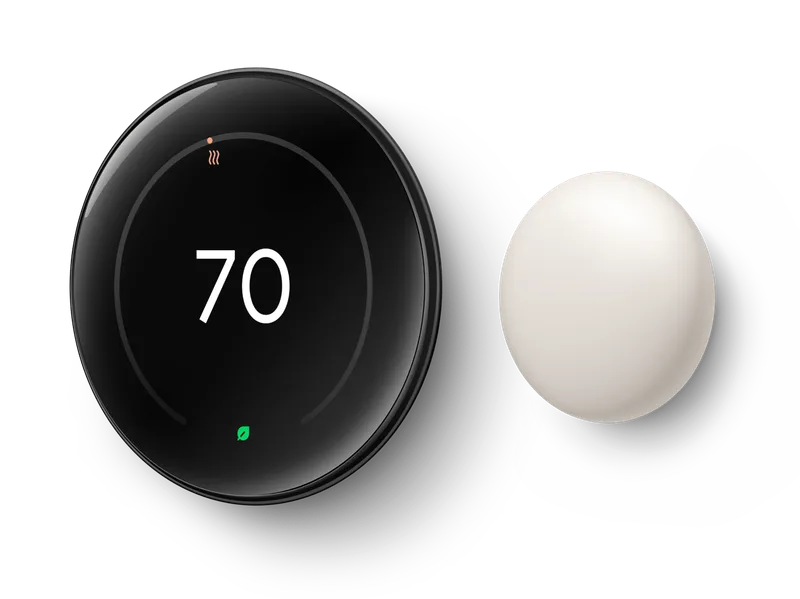
Remote sensing is not exclusive to ecobee. The Nest Learning Thermostat (4th gen) includes one temperature sensor and supports up to six. Compare how each model uses those readings and fits your routine, rather than treating a cold room as an automatic reason to reject Nest.
Platform support across major ecosystems
The Smart Thermostat Premium specifications list Apple HomeKit, Alexa, Google Assistant and SmartThings. Check compatibility for the exact thermostat and integration you plan to use; these listings do not establish Matter support.
Apple Home households can also consider Nest Learning Thermostat (4th gen), which connects through Matter. Compare the controls available in your preferred app rather than assuming ecobee is the only compatible option.
Higher-end models also have Alexa built in, functioning as a smart speaker with a microphone and reasonable speaker. Useful if you want voice control in a hallway without another device; irrelevant if you already have Echoes everywhere, and a consideration if an always-listening microphone in a hallway is unwelcome.
Installation and the C-wire question
ecobee needs continuous power, which usually means a C-wire (common wire) at the thermostat. Many older US homes do not have one.
ecobee includes a Power Extender Kit that resolves this in most cases by borrowing a wire at the furnace or air handler. Installing it means opening the HVAC unit and moving wires — well within reach of a confident DIYer with the instructions, and a reasonable job for an electrician or HVAC technician otherwise.
Does it actually save money?
Honestly: it depends, and you should be sceptical of precise savings claims from any thermostat vendor.
Savings come from not conditioning an empty house and from not overshooting target temperatures. If you already have a well-set programmable thermostat and a regular schedule, gains will be modest. If your heating currently runs on a fixed schedule regardless of occupancy, or you have been leaving it at one temperature all winter, the improvement can be substantial.
The room-sensor benefit is subtler and arguably larger: people who fix a cold bedroom stop compensating by overheating the whole house, and that is where real reductions tend to come from.
Who should buy ecobee
Consider Smart Thermostat Premium if you want occupancy-aware room sensors, Apple Home integration or built-in voice control. Confirm its compatibility with your HVAC system first.
Buy something else if you have a single-zone flat where one sensor suffices; you prefer Nest’s dial and learning behaviour (compared here); or you want the lowest-cost smart thermostat.
Sources and review scope
This is a research-based review. Our score is an editorial assessment using our published criteria; it is not a hands-on test result. We have not independently measured this product’s performance or long-term reliability.
- Smart Thermostat Premium specifications and included accessories
- ecobee thermostat compatibility checker
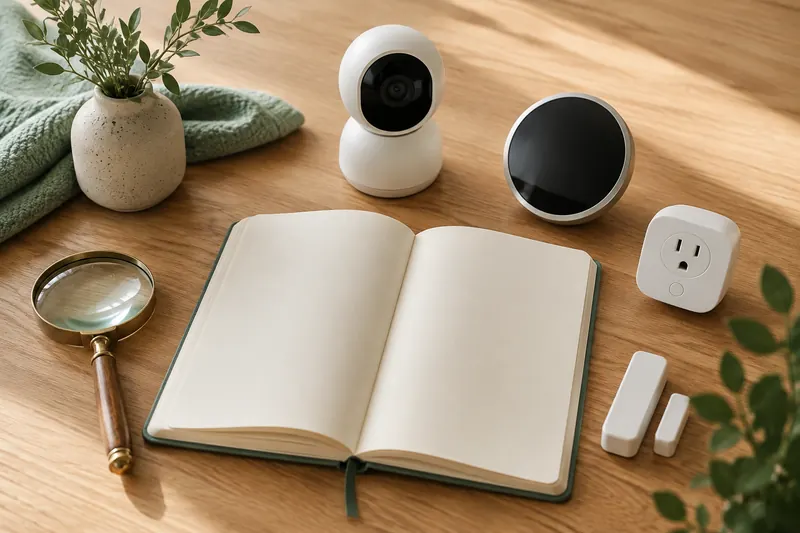
What to check for your setup: The pictured Smart Thermostat Premium includes a SmartSensor and Power Extender Kit, and its specifications cover compatible 24VAC HVAC equipment. Check your wiring and equipment in ecobee's compatibility checker before treating the kit as a C-wire solution, and confirm the included accessories when choosing another thermostat model.
Source notes checked . Prices and offers can change; confirm the current terms for your chosen equipment and plan.
Frequently asked questions
Do I need a C-wire for ecobee?
Usually yes, but the included Power Extender Kit resolves it in most homes without one. Photograph your existing thermostat wiring before ordering to know where you stand.
How many room sensors do I need?
Start with the rooms that are persistently uncomfortable — usually a main bedroom and one problem room. Two or three sensors covers most homes.
ecobee or Nest?
Smart Thermostat Premium offers occupancy-aware SmartSensors. Nest Learning Thermostat (4th gen) also includes a room sensor and supports Apple Home through Matter. Compare their scheduling, sensor controls and HVAC compatibility in Nest vs ecobee.
Does ecobee work with Apple Home?
Smart Thermostat Premium supports Apple HomeKit. Check the exact model before buying; Apple Home support is not the same as Matter certification.
Full specifications and scores
At a glance
- Installation
- DIY (C-wire may be needed)
- Contract
- None
- Monitoring
- Optional (ecobee Smart Security)
- Monthly
- $0–$10
- Equipment
- $150–$250
- Storage
- Cloud
- Works with
- Apple Home, Alexa, Google, SmartThings (model-dependent)