 4.1
4.1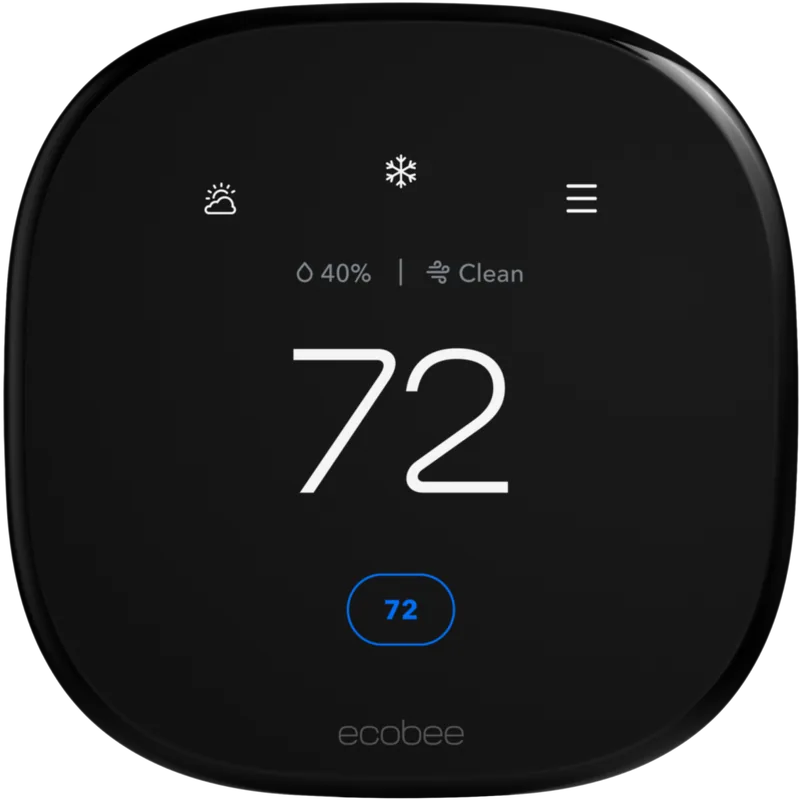
 4.4
4.4In this guide
Google Nest vs ecobee at a glance
| Feature | Google Nest | ecobee |
|---|---|---|
| Our score | 4.1/5 | 4.4/5 |
| Installation | DIY | DIY (C-wire may be needed) |
| Contract | None | None |
| Monitoring | Self-monitoring (professional via ADT partnership) | Optional (ecobee Smart Security) |
| Monthly cost | $0–$20 (Nest Aware) | $0–$10 |
| Equipment cost | $100–$450 per device | $150–$250 |
| Video storage | Cloud (limited on-device buffer) | Cloud |
| Works with | Google Home, Assistant, Matter | Apple Home, Alexa, Google, SmartThings (model-dependent) |
| Trial / returns | 30-day returns | 30-day returns |
| Best for | Google Home households wanting the best-in-class doorbell and thermostat | Homes with rooms that never reach the right temperature |
Diagnose the problem first
This comparison is unusually easy once you identify what is actually wrong.
If the problem is waste — heating an empty house, running to a schedule that no longer matches your life — Nest is the better answer. Its learning behaviour reduces runtime without anyone programming anything, and the presence sensing is good.
If the problem is comfort — one bedroom that never warms up, for example — compare the room-sensor features and included hardware of each model. Both ecobee and Nest Learning Thermostat offer remote temperature sensors.
Most households have both problems. Which one annoys you more determines the purchase.
Room sensors are the real differentiator
Every conventional thermostat measures temperature at one point, usually a hallway — the least representative place in the house. ecobee’s sensors move that measurement into the rooms that matter, and let you prioritise by time of day: bedrooms overnight, living room in the evening.
This also produces indirect savings. People with a cold bedroom compensate by overheating the whole house. Fix the cold room and that stops.
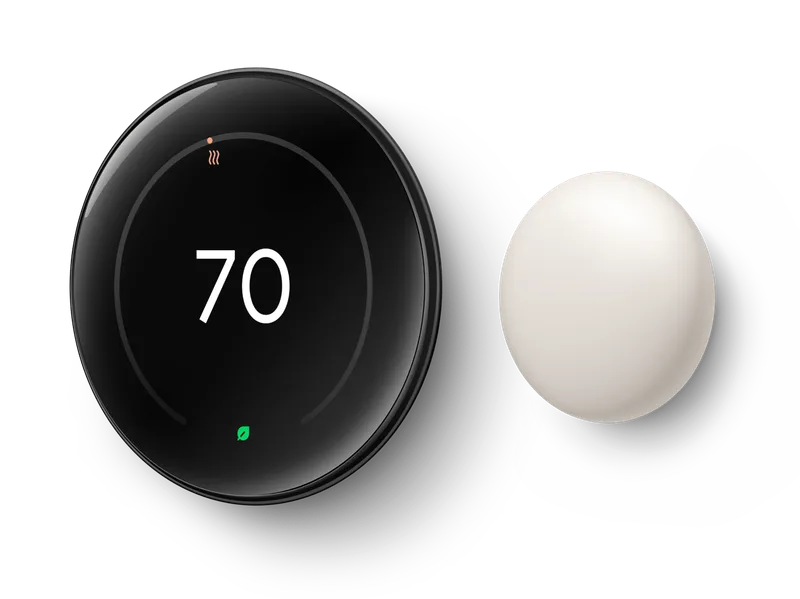
The Nest Learning Thermostat (4th gen) pictured above includes a Nest Temperature Sensor and supports up to six. Room sensing is not exclusive to ecobee; the lower-priced Nest Thermostat is a different model and does not support these sensors.
Platform support and interface
| Nest | ecobee | |
|---|---|---|
| Apple Home | Via Matter on the 4th gen; compatible controller required | Yes |
| Google Home | Native, excellent | Yes |
| Alexa | Yes | Built in on higher models |
| Room sensors | Yes — Learning Thermostat (4th gen); one included | Yes |
| Learning schedule | Yes, class-leading | Scheduling with occupancy |
| Interface | Physical dial, best in class | Touchscreen |
The Nest dial remains the most pleasant thermostat interface anyone has made. That is a small thing you touch every day, and worth something.
Installation notes for both
Both generally need a C-wire. ecobee includes a Power Extender Kit to work around its absence; Nest can sometimes run without one but is less reliable doing so.
Before ordering either, photograph your existing thermostat’s wiring with the faceplate off. Thirty seconds now avoids an unpleasant discovery halfway through.
Which should you choose?
Choose Nest if your schedule is irregular; you use Google Home; you want the best interface; or you want it to work without configuration.
Choose ecobee if specific rooms are uncomfortable; you use Apple Home; you want built-in Alexa; or you want the broadest compatibility.
Frequently asked questions
Which saves more money, Nest or ecobee?
Nest if your problem is heating an empty house; ecobee if you overheat the whole home to fix one cold room. Be sceptical of precise savings claims from either.
Does Nest work with Apple Home?
The Nest Learning Thermostat (4th gen) supports Matter-compatible smart-home apps. Check your Apple Home controller requirements and exact thermostat model; Google Home is still required for initial setup. See Google’s Matter compatibility guidance.
Do I need a C-wire?
Usually. ecobee includes a Power Extender Kit for homes without one. Photograph your wiring before ordering.
Full specifications and scores
Quick scores
- Google Nest
- 4.1/5 — Excellent individual devices, no longer a whole security system
- ecobee
- 4.4/5 — The thermostat that solved the cold-bedroom problem