In this guide
What we like
- One of the largest professional monitoring networks in the US, with redundant centres
- Professional installation and ongoing service included in most plans
- Google Nest cameras and doorbells integrate natively into the newer systems
- Six-month money-back guarantee is unusually long for the category
What to watch
- Multi-year contracts on professionally installed systems, with early-termination fees
- Pricing is quote-based, so comparison shopping takes phone calls
- Dealer network means installation quality varies by market
- Meaningfully more expensive over three years than DIY alternatives
What you are actually buying
It helps to separate ADT into two products that share a logo.
The first is the monitoring network. ADT operates a large set of interconnected monitoring centres across the United States, built so that if one goes down — storm, outage, fire — another picks up its traffic without the customer noticing. This is unglamorous infrastructure and it is the single strongest argument for the company. When an alarm fires at 3 a.m., the thing that matters is whether a trained human answers within seconds, every time, for years.
The second is the equipment and installation, and here ADT is less distinctive. The current systems use panels and sensors that are competent but not remarkable, with Google Nest cameras and doorbells handling video. Installation is carried out either by ADT directly or by an authorised dealer, and that distinction matters more than most buyers realise — see the dealer section below.
You are, in short, paying a premium for the answering side of the equation rather than the hardware side.
Pricing, and why nobody can quote you a number
ADT does not publish complete pricing, because the final figure depends on your home, the package, current promotions and what the sales representative can approve. That is genuinely frustrating when you are trying to compare options on a spreadsheet.
The ranges below reflect what customers typically report. Treat them as a sanity check on the quote you receive, not as a price list.
- Monitoring: roughly $25–$70 per month depending on tier. The cheapest tiers cover the alarm; video recording and smart-home control sit higher up.
- Equipment: roughly $200 for a basic entry package to $1,600 and beyond for a large home with multiple cameras. Frequently financed into the monthly payment.
- Installation: often advertised as free or heavily discounted as a promotion, then recovered through the contract term.
The contract, honestly assessed
Professionally installed ADT systems typically carry a 36-month agreement. Cancelling early generally means paying a substantial percentage of the remaining balance. This is the single most common source of complaints about the company, and it is worth being unsentimental about it.
A long contract is not automatically bad. If you own your home, intend to stay, and value the monitoring network, spreading equipment cost across three years at a fixed monthly rate is a reasonable arrangement — it is how most people buy a car.
It becomes a bad deal in specific circumstances: if you rent, if a move is plausible within three years, if your income is variable, or if you are signing largely because a salesperson was persuasive on your doorstep. In those cases a contract-free system such as SimpliSafe or Ring removes the risk entirely, at some cost in monitoring depth.
ADT does offer a self-install option with far lighter commitment. It is a meaningfully different product from the professionally installed system, and closer in spirit to its DIY competitors.
The dealer question — the part most reviews skip
A large share of ADT installations are performed not by ADT but by authorised dealers: independent local businesses licensed to sell and install under the ADT brand. Monitoring still runs through ADT’s centres, so the core service is consistent. Everything you actually experience — the sales conversation, the installation quality, the follow-up when a sensor misbehaves — comes from that local company.
This is why ADT reviews vary so wildly by region. The same brand genuinely delivers different experiences in different markets.
Two practical steps before you sign:
- Ask directly whether you are dealing with ADT or an authorised dealer. You are entitled to a straight answer.
- If it is a dealer, look up that specific company — by its own name, not ADT’s — in local reviews and with your state licensing board.
This is also, candidly, where our own service is useful: the installers in our network are vetted individually rather than by brand affiliation.
Living with it: app, equipment and Nest integration
The ADT+ app is a clear improvement on what came before. Arming and disarming are quick, camera feeds load without much fuss, and the automation options — lock the door and arm at a set time, for example — cover what most households need without pretending to be a full automation platform.
The Google Nest partnership is the most interesting thing ADT has done in years. Nest cameras and doorbells are genuinely excellent, with the best familiar-face and package detection in the consumer bracket, and they now sit natively inside the ADT system. If you are buying ADT primarily for the alarm, the video side arrives better than the company could plausibly have built alone.
The caveat is Google’s history of retiring hardware lines. Nest Secure was discontinued; Nest hardware has changed direction more than once. That risk is worth weighing on a multi-year commitment.
Who ADT is right for
Consider ADT if you own your home and expect to stay several years; you want a single company responsible for design, installation, monitoring and service; you value the depth of the monitoring network over hardware novelty; or you simply do not want to configure anything yourself. That last reason is legitimate and underrated.
Look elsewhere if you rent, might move within three years, want to avoid contracts, are optimising for lowest total cost, or enjoy setting things up yourself. ADT vs SimpliSafe is the comparison that usually settles this, and our DIY guide covers the alternatives.
Sources and review scope
This is a research-based review. Our score is an editorial assessment using our published criteria; it is not a hands-on test result. We have not independently measured this product’s performance or long-term reliability.
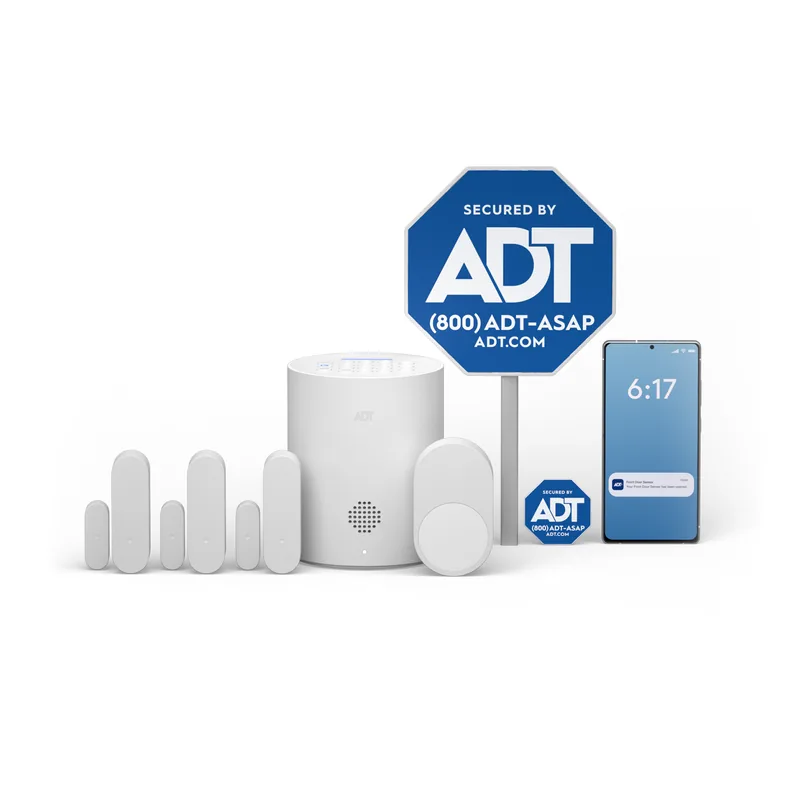
What to check for your setup: The pictured ADT Blu starter kit is a DIY option with optional monthly professional monitoring. Confirm the installation route, included equipment and written cancellation terms in your quote; professional installation and DIY purchases can carry different terms.
Source notes checked . Prices and offers can change; confirm the current terms for your chosen equipment and plan.
Frequently asked questions
Does ADT require a contract?
Professionally installed systems typically require a 36-month agreement. The self-install option carries far lighter commitment. Always confirm the term and the early-termination formula in writing before signing.
How much does ADT cost per month?
Monitoring generally runs about $25–$70 per month depending on tier, before financed equipment. Because pricing is quote-based, ask for the total committed cost across the full contract term rather than comparing monthly figures.
Is ADT better than SimpliSafe?
Better at monitoring infrastructure and hands-off service; worse on flexibility and total cost. If you want a professional to own the whole thing, ADT. If you want no contract and lower spend, SimpliSafe. We compare them directly in ADT vs SimpliSafe.
Can I take ADT with me when I move?
Usually yes, via a relocation programme, though it often extends your agreement and may involve fees for new equipment. Confirm the specifics before you move rather than after.
Does ADT work during a power or internet outage?
Yes. Systems include battery backup and cellular communication, so an alarm still reaches the monitoring centre when mains power or broadband is down. Battery runtime is finite — typically hours, not days.
Full specifications and scores
At a glance
- Installation
- Professional (DIY option via Self Setup)
- Contract
- 36 months typical for professional installs
- Monitoring
- Professional only
- Monthly
- $25–$70
- Equipment
- $200–$1,600+
- Storage
- Cloud (Nest Aware for cameras)
- Works with
- Google Nest, Alexa, Z-Wave