In this guide
What we like
- The widest, best-executed range of doorbells and cameras at consumer prices
- Professional monitoring is notably cheap for what it includes
- Deep Alexa integration — announcements, Echo Show feeds, voice arming
- No contract, and the app is genuinely well designed
What to watch
- Video recording essentially requires a subscription
- No local storage option on most devices
- Amazon ownership is a real consideration for privacy-minded buyers
- Past security and law-enforcement-sharing controversies
Cameras first, alarm second
Ring is best understood as a camera company that also sells an alarm, and the ordering matters when you are deciding whether it fits.
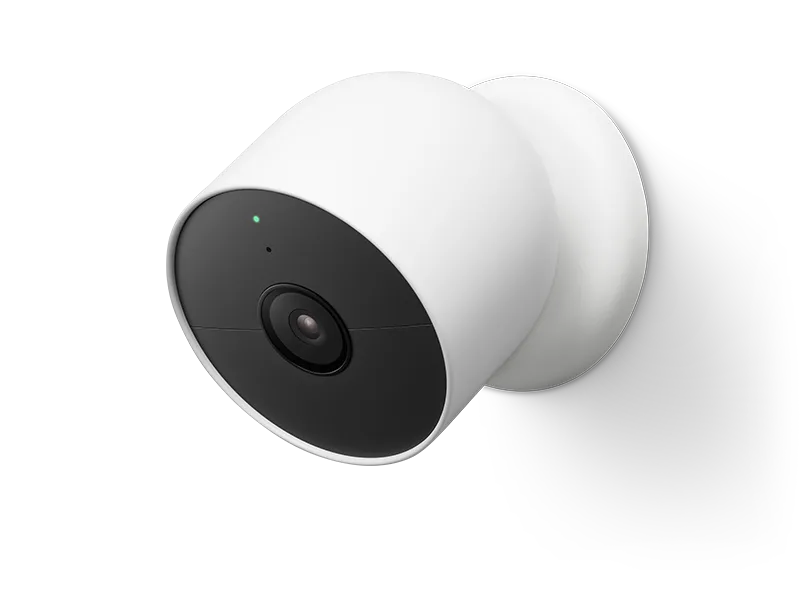
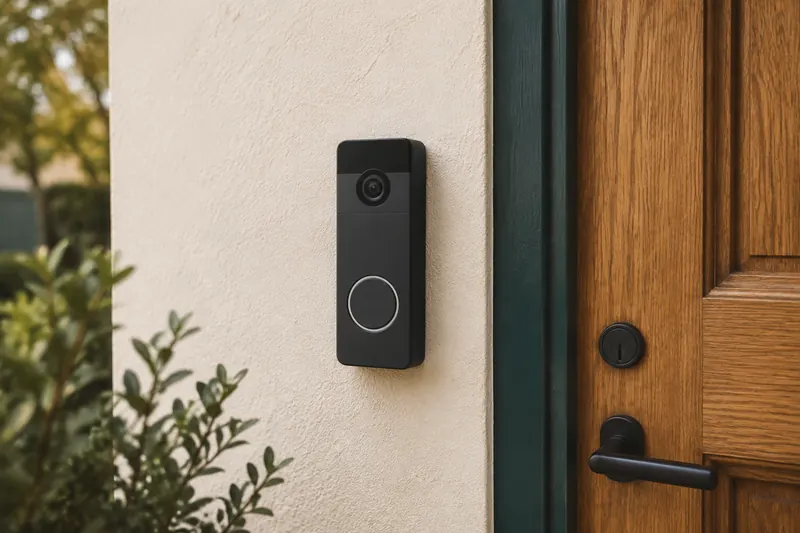
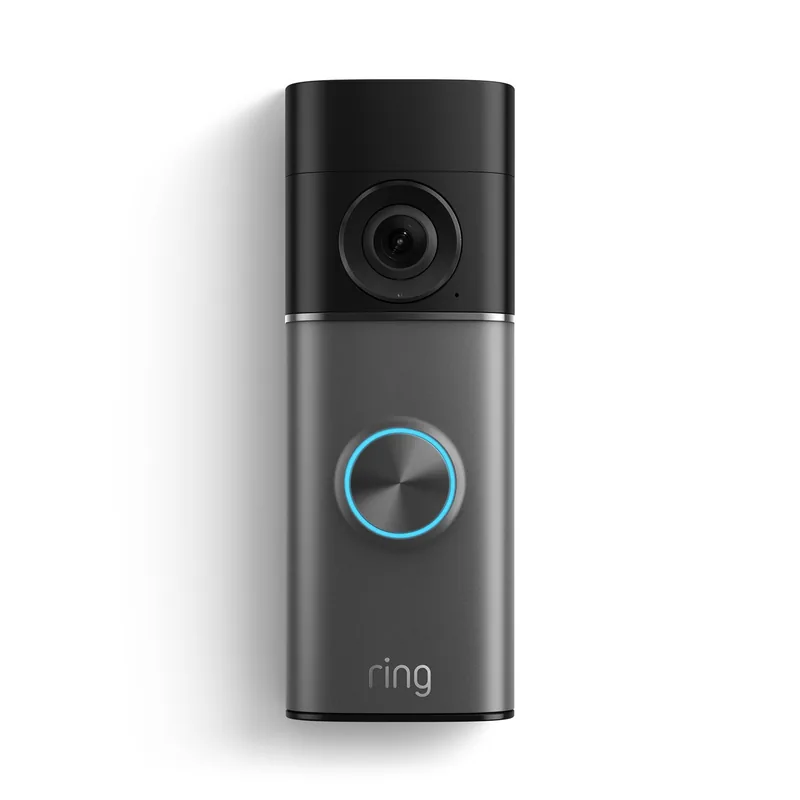
The doorbell range remains the most refined in the category. Motion detection is well tuned, the app is quick, and the hardware handles weather and awkward wiring better than most rivals. The camera line-up is unusually broad — battery, wired, floodlight, solar, pan-tilt, indoor — which means you can usually cover an odd corner of a property without compromise.
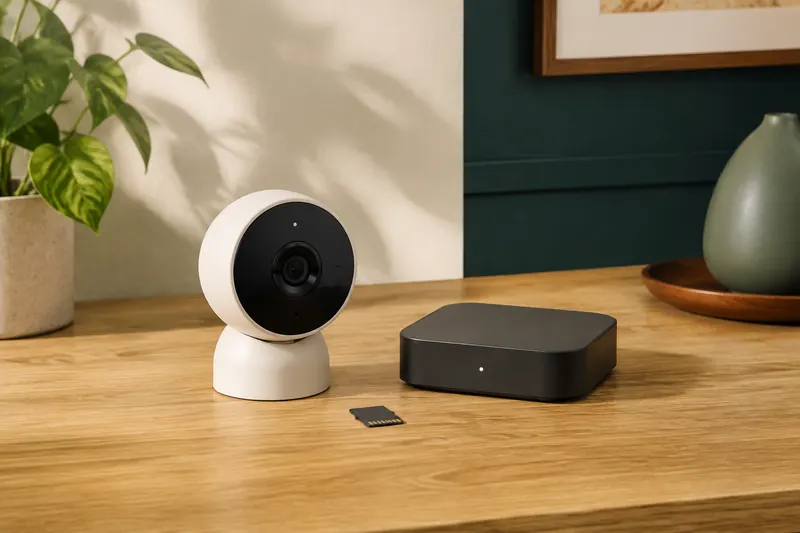
The Ring Alarm is genuinely good and genuinely cheap. Sensors are reliable, the base station has cellular and battery backup, and there is no contract. It is not the most sophisticated alarm available, but at the price it is hard to fault.
If cameras are your priority and the alarm is secondary, Ring is probably your answer. If it is the other way round, SimpliSafe deserves a look.
The Alexa advantage is real
Amazon ownership has an upside that is easy to undersell. If you have Echo devices, Ring integration goes well beyond “works with”: doorbell presses announce through every speaker in the house, an Echo Show pulls up the feed automatically, and voice arming works without a bridge or a workaround.
This is the tightest camera-to-voice-assistant integration available at consumer prices, and in daily use it is the feature people notice most.
The corollary is that Ring is meaningfully less compelling outside Amazon’s ecosystem. There is no Apple Home support. Google Assistant support is basic. If your house runs on Google Nest, you are buying against the grain.
Subscriptions: what is free and what is not
Without a subscription, Ring cameras give live view and motion notifications. They do not record. That means no clip to review, no evidence for police, no history — which for most buyers makes a plan effectively mandatory rather than optional.
Ring’s current plans, checked September 7, 2026:
- Solo ($4.99/month): recording and eligible smart alerts for one device.
- Multi ($9.99/month): covers devices at one location.
- Pro ($19.99/month): adds professional monitoring with eligible alarm equipment and enrolment.
These monthly rates exclude tax. Annual billing and additional services have separate prices; feature availability depends on equipment and location. Buying a camera alone does not provide a monitored alarm.
Privacy: the part that deserves a clear answer
Ring’s privacy history is genuinely mixed, and you should decide with the facts rather than the vibes.
What happened: Ring drew sustained criticism for its law-enforcement partnership programme, which let police request footage from users through the app; for a 2023 FTC settlement over employee and contractor access to customer video and inadequate security controls; and for earlier incidents where weak account security allowed strangers to access cameras.
What changed: end-to-end encryption is now available, two-factor authentication is mandatory, the police request feature was substantially restructured, and internal access controls were tightened under the settlement.
What to weigh: footage still lives on Amazon’s servers by default, and most devices offer no local storage. If that is unacceptable in principle, Eufy or a local NVR is the direction to look. If it is an acceptable trade for the ecosystem and the price, Ring’s current security posture is reasonable — and materially better than it was.
Who should buy Ring
Buy Ring if you want the best doorbell available; you already run Alexa and Echo devices; you want cameras and monitoring at the lowest combined cost; or you want to start with one doorbell and expand gradually.
Buy something else if cloud storage on Amazon’s servers troubles you; you want to avoid subscriptions entirely; you live in Apple Home or Google Home; or you want the alarm to be the strongest part of the system.
Sources and review scope
This is a research-based review. Our score is an editorial assessment using our published criteria; it is not a hands-on test result. We have not independently measured this product’s performance or long-term reliability.
What to check for your setup: Check the exact doorbell or camera generation and the plan that covers it: Ring Solo covers one device, while Multi and Pro cover one location. Saved video, advanced detection and continuous recording have different subscription and device requirements; buying a doorbell alone does not include alarm monitoring.
Source notes checked . Prices and offers can change; confirm the current terms for your chosen equipment and plan.
Frequently asked questions
Do Ring cameras work without a subscription?
Partly. You get live view and motion alerts, but no recording — nothing is saved to review later. For most buyers a plan is effectively required.
Is Ring Alarm any good compared with SimpliSafe?
Very close on the fundamentals, and cheaper if you also want cameras. SimpliSafe edges ahead on alarm-specific features like live agent intervention. See Ring vs SimpliSafe.
Can police access my Ring footage?
Not without your consent or valid legal process. The programme that let police request footage directly in-app was substantially restructured after criticism.
Does Ring work with Apple HomeKit?
No. Ring has no Apple Home support. For an Apple household, look at Abode, Aqara or Eufy’s HomeKit-compatible models.
Full specifications and scores
At a glance
- Installation
- DIY (professional available)
- Contract
- None
- Monitoring
- Optional professional or self-monitoring
- Monthly
- $0–$20
- Equipment
- $200–$600
- Storage
- Cloud (subscription required for recording)
- Works with
- Alexa (deep), Amazon devices