In this guide
Most security advice assumes a detached house with a garden and a garage. A flat is a different problem: usually one door, maybe accessible windows, shared corridors you do not control, and a tenancy agreement that forbids drilling.
The good news is that a flat is genuinely easier to secure well. Fewer entry points means fewer sensors, and the systems below install without a single hole in a wall.
| Pick | Award | Score | Monthly | Contract |
|---|---|---|---|---|
| SimpliSafe | Best overall for renters | 4.6/5 | $0–$79.99 | None |
| Ring | Best if you want cameras | 4.3/5 | $0–$20 | None |
| August | Best renter-friendly smart lock | 4/5 | $0 | None |
| Kangaroo | Cheapest workable option | 3.4/5 | $0–$13 | None |




1. SimpliSafe — Best overall for renters
Why it wins: Adhesive sensors, no drilling, month-to-month monitoring and it packs into a box when you move.
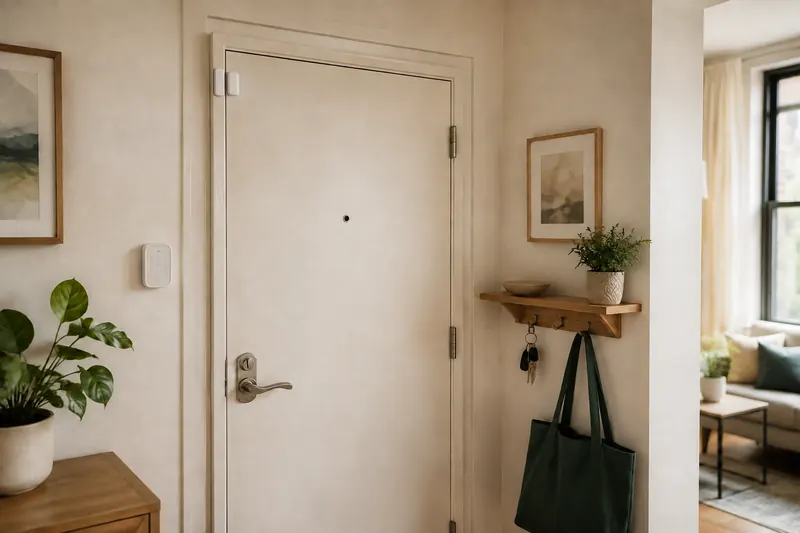
For a one or two-bedroom flat you need surprisingly little: an entry sensor on the front door, a motion sensor covering the hallway, and the base station. That is often under $250.
Monitoring is month to month, which suits the uncertainty of renting. If you move mid-lease, everything comes with you and nothing needs making good.
What we like
- Month-to-month monitoring with no long-term contract
- Adhesive sensor mounting supports DIY installation
- Outdoor agent coverage on Pro overnight or Pro Plus around the clock
What to watch
- Home automation is minimal compared with Vivint or a Hubitat-style setup
- Camera line-up is smaller than Ring or Arlo
- Outdoor agent coverage starts at $49.99/month and requires eligible cameras
2. Ring — Best if you want cameras
Why it wins: Indoor cameras, a plug-in doorbell option for flats with no external wiring, and unlimited camera recording on one cheap plan.
Ring’s advantage in a flat is the doorbell options: battery-powered and plug-in variants mean you can have a video doorbell without touching the building’s wiring — often the only viable route in a leasehold flat.
Indoor cameras cover the living area, and the top plan includes alarm monitoring too.
Consider first: whether a camera pointing at a shared corridor is permitted by your building. Many are not, and neighbours may reasonably object.
What we like
- The widest, best-executed range of doorbells and cameras at consumer prices
- Professional monitoring is notably cheap for what it includes
- Deep Alexa integration — announcements, Echo Show feeds, voice arming
What to watch
- Video recording essentially requires a subscription
- No local storage option on most devices
- Amazon ownership is a real consideration for privacy-minded buyers
3. August — Best renter-friendly smart lock
Why it wins: Fits inside your existing deadbolt. The outside of the door is untouched, your keys still work, and your landlord need never know.
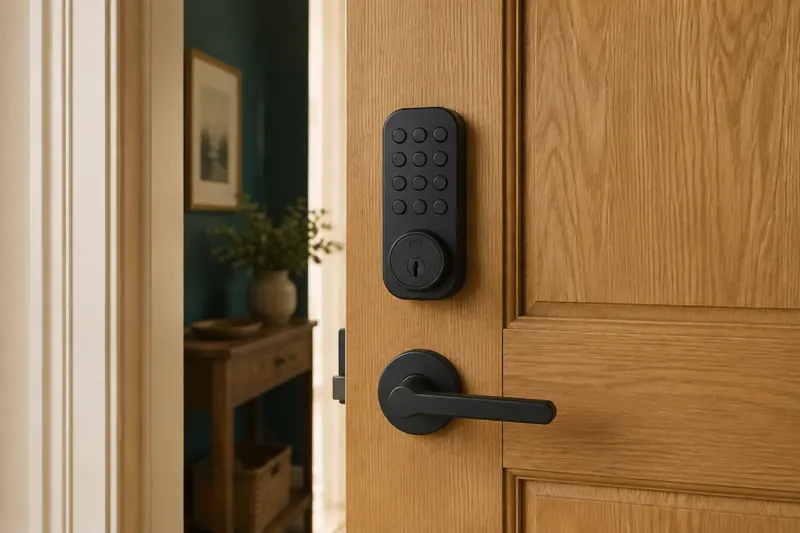
Most smart locks replace the entire deadbolt — a modification most tenancy agreements prohibit. August attaches to the inside of the lock you already have.
Nothing changes externally, existing keys keep working, and removal leaves no trace. For renters this is usually the deciding factor.
What we like
- Retrofit design — exterior hardware and existing keys are unchanged
- Ideal for renters; reversible with no visible modification
- Optional Auto-Unlock using compatible phone and app settings
What to watch
- Bulky on the interior side of the door
- Battery life is shorter than keypad deadbolts
- No built-in keypad on most models — phone or add-on required
4. Kangaroo — Cheapest workable option
Why it wins: Entry and motion sensors at a fraction of the price, with optional monitoring in the low teens.
For a studio or one-bedroom on a tight budget, Kangaroo covers the basics — does the door open, does something move — for less than a single sensor bundle elsewhere.
It is not a substitute for a full system, and cameras are limited. As a first line of defence for a small rental, it is considerably better than nothing.
What we like
- The lowest entry cost of any system here
- Monitoring priced well below the market
- Genuinely renter-friendly — adhesive mounting, nothing drilled
What to watch
- Limited sensor and camera range
- Build quality reflects the price
- Automation and integrations are minimal
Check your lease before you buy
Three clauses matter, and reading them takes five minutes.
Alterations. Most tenancies prohibit drilling or permanent fixings. Everything recommended here is adhesive or retrofit, but confirm.
Locks. Many agreements require the landlord to retain a working key. This is precisely why a retrofit lock like August works and a full deadbolt replacement does not.
Cameras and common areas. Filming shared corridors, stairwells or entrances is frequently prohibited, and in some jurisdictions raises data-protection obligations. Point cameras at your own space.
What a flat actually needs
Resist over-specifying. A typical two-bedroom flat is well covered by:
- One entry sensor on the front door — the entry point in the overwhelming majority of flat burglaries.
- One motion sensor covering the hallway or main living space.
- Entry sensors on any accessible windows — ground floor, or anything reachable from a balcony, flat roof or fire escape.
- A video doorbell, if permitted. More useful for parcels than for security, but genuinely useful.
- One indoor camera, if you want it, pointed at the front door rather than the living space.
That is typically $250–$400 of equipment. Anything much beyond it is usually specifying for a house you do not live in.
Security that has nothing to do with technology
Worth stating, because it is cheap and effective.
A door chain or bar costs under $20 and defeats the most common flat intrusion method, which is simply pushing past someone who opened the door.
Window locks on accessible windows. Often already fitted and never used.
Do not buzz people in. The single most common way intruders get into apartment buildings is a resident buzzing open the main door for someone claiming to be a delivery.
Contents insurance. A security system does not replace it. Many policies cost less per month than a monitoring plan.
Frequently asked questions
Can I install a security system in a rented flat?
Yes. Systems like SimpliSafe use adhesive sensors with no drilling, and everything comes with you when you move. Check your tenancy for clauses on alterations and locks.
Can I put a camera in a shared corridor?
Usually not. Most buildings prohibit it, and filming shared space can create data-protection obligations. Point cameras at your own door and space instead.
Can renters use a smart lock?
Yes, if you choose a retrofit model like August that fits inside the existing deadbolt. The exterior is unchanged and existing keys still work — usually acceptable where a full replacement would not be.
How much should apartment security cost?
Typically $250–$400 of equipment for a two-bedroom flat, plus $0–$25 a month if you want monitoring. Much more than that usually means over-specifying.