In this local guide
Omaha sits in a part of the country where the weather actively shapes what security equipment makes sense. Severe thunderstorms and the associated power outages are a routine part of spring and summer, and winters are cold enough to change how battery equipment behaves.
Both facts point in the same direction, and it is a direction most national buying guides never mention.
Storm season makes backup power non-negotiable
This is the single most important local consideration, and it is worth being emphatic about.
A security system that communicates only over your home broadband is defeated by a power cut — which in this region happens several times a year, often during exactly the severe weather when you would most want the system working.
What this means practically:
- Cellular backup is essential, not optional. It is usually a few dollars a month and it is the difference between a system that works during a storm and one that does not. Do not economise here.
- Check the base station’s battery runtime. Most give hours rather than days. For a multi-day outage, a small UPS on the router and base station extends that considerably for well under $100.
- Local storage cameras keep recording during an internet outage, where cloud cameras generally do not. In a market with frequent outages this is a real argument for Eufy-style local recording.
- Surge protection matters. Lightning-induced surges destroy networking equipment. Protect the router, the base station and any PoE switch.
Housing stock and what it implies
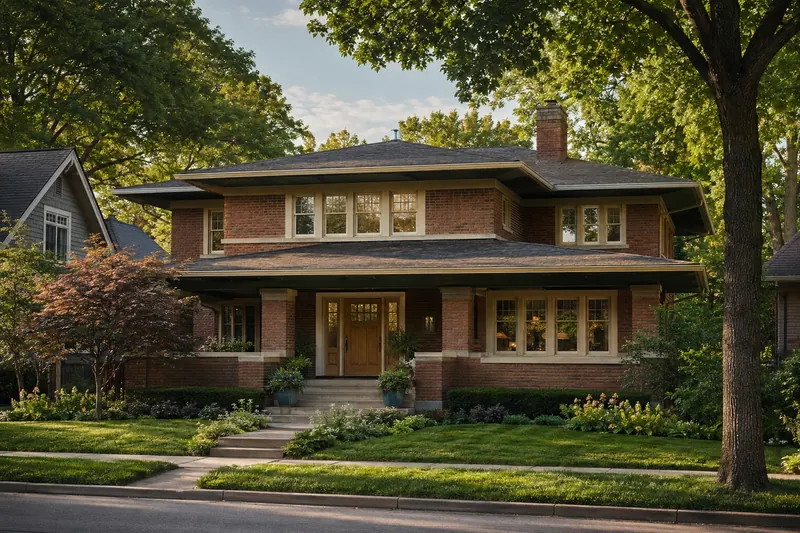
Older neighbourhoods — Dundee, Benson, Field Club and similar — bring the familiar pre-war issues: no neutral wires at switch boxes, no C-wire at the thermostat, and plaster-and-lath walls that attenuate wireless signal. Lutron for lighting and ecobee with its power extender for climate are the usual answers.
Post-war and newer suburbs to the west and in Papillion, La Vista and Elkhorn are generally straightforward — neutral wires present, plasterboard walls, DIY installation genuinely easy.
Basements and storm shelters are near-universal. Worth sensors on egress windows, and a water sensor near the sump pump — basement water is a more common and more expensive claim here than burglary.
What a cold winter does to your equipment
This is the single most under-discussed factor in northern markets, and it catches people out every January.
Battery cameras lose a large share of capacity below freezing. A camera advertised at four months can need recharging every three or four weeks in a real winter. If a camera is mounted somewhere awkward to reach, that becomes a genuine problem in February.
Adhesive sensors fail on cold surfaces. Adhesive needs a surface above roughly 10 °C to bond properly. Sensors mounted on a cold window frame will hold for a few weeks and then drop off. Warm the frame with a hairdryer first, or install during milder weather.
Doorbell transformers struggle in the cold. An older 10 VAC transformer that just about drives a video doorbell in summer often cannot in winter, producing intermittent operation that is maddening to diagnose.
What to do about it: use wired cameras wherever mains power exists; fit solar strips to battery cameras, which help even in weak winter sun; buy a spare battery per camera so you swap rather than wait; and tighten activity zones before winter, since a camera watching a busy street wakes constantly and drains far faster.
Alarm permits and false alarm fines
Most US municipalities require a permit to operate a monitored alarm system, and charge fines for repeated false alarms. Omaha is no exception, though the specifics change from time to time.
What to check before your system goes live:
- Whether an alarm permit is required and what it costs annually. This is usually handled by the police department or a city licensing office.
- The false alarm fine schedule. Typically the first one or two are free, then fines escalate — commonly from around $50 into the hundreds for repeat incidents within a year.
- Whether verified response applies. Some jurisdictions deprioritise or decline dispatch to unverified alarms because of high false-alarm rates. Where that is the case, verification features — a monitoring agent who can see a camera, or on-device video analytics — matter considerably more than they otherwise would.
The practical consequence is that a well-tuned system saves you money. Most false alarms come from entry delays that are too short, motion sensors pointed at heat sources, or pets triggering non-pet-immune detectors. Getting that right at installation is worth more than any equipment upgrade.
Checking an installer is legitimate
Alarm installation is a licensed trade in most states, and the licensing exists for good reason — installers have access to your home and to the system protecting it.
Four checks worth five minutes:
- Ask for the licence number and verify it with the state licensing board directly, rather than trusting a certificate on a website.
- Ask for proof of liability insurance and check it is current. A professional produces this without hesitation.
- If they represent a national brand, ask whether they are that company or an authorised dealer. Much national-brand installation is carried out by independent local businesses. The monitoring is consistent; the installation experience is not. Research the dealer by its own name.
- Get the full multi-year total in writing before signing — equipment, financing, monitoring, fees, and what the rate becomes after any promotional period.
Every installer in our network is individually vetted for licensing and insurance rather than by brand affiliation, which is the part homeowners find hardest to do themselves.
Frequently asked questions
Do I need cellular backup for a security system in Omaha?
We would treat it as essential rather than optional. Storm-related power and internet outages are routine here, and without cellular backup the system cannot report an alarm during exactly the conditions when you most want it working.
Do I need an alarm permit in Omaha?
Most municipalities require one for monitored systems and fine repeated false alarms. Confirm current requirements and fees with the city directly, as these change.
What happens to my cameras during a power outage?
Cloud cameras generally stop recording. Local-storage systems like Eufy keep recording if the hub has power — a small UPS on the hub and router is inexpensive insurance in this market.
Is the quote really free?
Yes. The installer pays us a referral fee, not you, and there is no obligation. See our disclosure.