In this guide
What we like
- Genuinely no required subscription — local storage on the HomeBase
- Excellent battery life, often measured in months
- On-device AI for person, pet and vehicle detection
- Strong value per camera compared with subscription-dependent rivals
What to watch
- A 2023 disclosure showed some streams reached the cloud contrary to marketing
- Professional monitoring options are limited
- HomeBase is a single point of failure for the whole system
- App experience is less polished than Ring or Arlo
The no-subscription proposition
Almost every camera brand has converged on the same model: cheap hardware, mandatory recurring fee. Eufy went the other way. Cameras record to a HomeBase in your home — local storage, included, no monthly cost.
Over the life of a system this changes the arithmetic completely. Four cameras on a $10-per-month plan is $600 across five years, on top of hardware. With Eufy that figure is zero. Eufy hardware costs more upfront, and it is still comfortably cheaper over any realistic ownership period.
There are secondary benefits. Local footage keeps working when broadband drops. Playback from a drive in your house is faster than streaming from a distant server. And your video is not sitting on a large company’s infrastructure by default.
The 2023 disclosure, stated plainly
In late 2022 and into 2023, security researchers demonstrated that Eufy’s “local storage only” marketing was not wholly accurate. Specifically: event thumbnails were being uploaded to cloud servers to support push notifications, in some cases without clear disclosure; and camera streams could be accessed via a URL outside the app under certain conditions. Some marketing language about end-to-end encryption did not match implementation.
What the company did: acknowledged the discrepancies, corrected the marketing language, moved to encrypt the relevant traffic, and published clearer documentation about what leaves the home and why.
How to weigh it: the core local-storage architecture was, and is, real — this was not a fabrication. But the gap between marketing and implementation went unaddressed until researchers forced it, and that is a legitimate reason for caution about trusting privacy claims from any vendor without verification.
The hardware is genuinely good
Setting the trust question aside, Eufy makes strong products.
Battery life is class-leading — often quoted in months, and unusually close to accurate in normal use because on-device AI filters events before waking the radio.
On-device detection distinguishes people, pets and vehicles without a cloud round trip, so alerts arrive fast and keep working offline.
The dual-camera models — one wide lens for the scene, one telephoto for faces or packages — are a genuinely clever design that rivals have been slow to copy.
The weaknesses are the app, which is functional but less polished than Ring’s, and the security system, which is thinner than a dedicated alarm from SimpliSafe or Abode.
The HomeBase single point of failure
Local storage means a box in your house holds your footage, and that has an obvious implication: if a burglar takes the HomeBase, they take the evidence.
Mitigations, in order of effort: put the HomeBase somewhere non-obvious rather than beside the front door; enable optional cloud backup for critical cameras, which reintroduces a small subscription but only where it matters; and make sure at least one camera covers the room the HomeBase is in.
This is a real trade-off rather than a fatal flaw. Cloud storage is immune to theft but depends on a company’s servers, pricing and continued existence. Neither model is strictly better — they fail differently.
Who should buy Eufy
Buy Eufy if you refuse to pay monthly for cameras; you want footage stored at home; you want long battery life and few notifications; or you are covering several positions and subscription costs would compound.
Buy something else if the 2023 disclosure undermines your trust; you want professional monitoring (SimpliSafe); you want the most polished app (Ring); or you need deep ecosystem integration.
Sources and review scope
This is a research-based review. Our score is an editorial assessment using our published criteria; it is not a hands-on test result. We have not independently measured this product’s performance or long-term reliability.
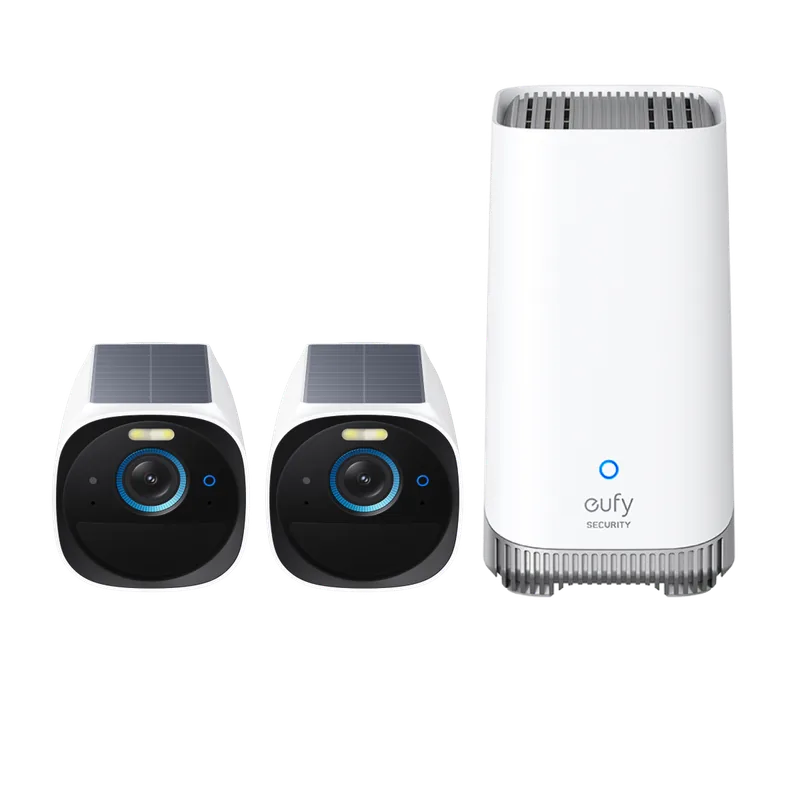
What to check for your setup: The pictured eufyCam S330 kit uses HomeBase 3 for local event recordings and does not support continuous 24/7 recording. Check the exact camera and HomeBase pairing and any separately purchased storage drive; cloud backup or thumbnail notifications still send selected video or previews to the cloud.
Source notes checked . Prices and offers can change; confirm the current terms for your chosen equipment and plan.
Frequently asked questions
Does Eufy really work without a subscription?
Yes. Cameras record to the HomeBase in your home and playback is free. Optional cloud backup exists but is not required for core functionality.
Is Eufy safe after the 2023 cloud upload issue?
The specific problems — undisclosed thumbnail uploads and unencrypted stream access — were acknowledged and addressed. Whether that restores your trust is a personal judgement; the local-storage architecture itself was real throughout.
What happens if someone steals the HomeBase?
You lose the footage stored on it. Hide it away from entry points, cover it with a camera, and consider cloud backup for your most important camera.
Eufy or Wyze for budget cameras?
Eufy for battery life, detection accuracy and a better security record; Wyze for the lowest possible price. See Eufy vs Wyze.
Full specifications and scores
At a glance
- Installation
- DIY
- Contract
- None
- Monitoring
- Self-monitoring (limited professional option)
- Monthly
- $0 (optional cloud from ~$3)
- Equipment
- $100–$550
- Storage
- Local (HomeBase) with optional cloud
- Works with
- Alexa, Google Assistant, Apple Home (varies)