In this guide
An indoor camera has an easy life. An outdoor camera faces driving rain, UV, freeze-thaw cycles, spiders that nest in the housing and set off motion alerts at 4 a.m., and temperatures that halve battery capacity.
This is why outdoor cameras fail and indoor ones do not, and why paying more outdoors is usually justified.
| Pick | Best for | Score | Power | Storage |
|---|---|---|---|---|
| Vivint | Best deterrence | 4.4/5 | Wired (professional) | Cloud |
| Arlo | Best wire-free | 4/5 | Battery or solar | Cloud (local on some) |
| Eufy | Best without a subscription | 4/5 | Battery or solar | Local (HomeBase) |
| Ring | Best floodlight camera | 4.3/5 | Wired or battery | Cloud |




1. Vivint — Best deterrence
Why it wins: It does not just record an intruder — it detects them on-device and warns them off with light, sound and a spoken message.
Every other camera here notifies you and hopes you are holding your phone. The Vivint Outdoor Camera Pro acts on its own: it identifies a person lingering, illuminates them, and tells them they are being recorded.
Stopping a break-in beats documenting one. This is the only mainstream camera that genuinely tries.
Watch out for: it comes with a Vivint system and its five-year cost. You cannot buy it standalone.
What we like
- Autonomous deterrence with light, tone and voice
- On-device person detection, fast and offline-capable
- Professionally installed and warranted
What to watch
- Only available with a full Vivint system
- Highest total cost here
- Professional installation required
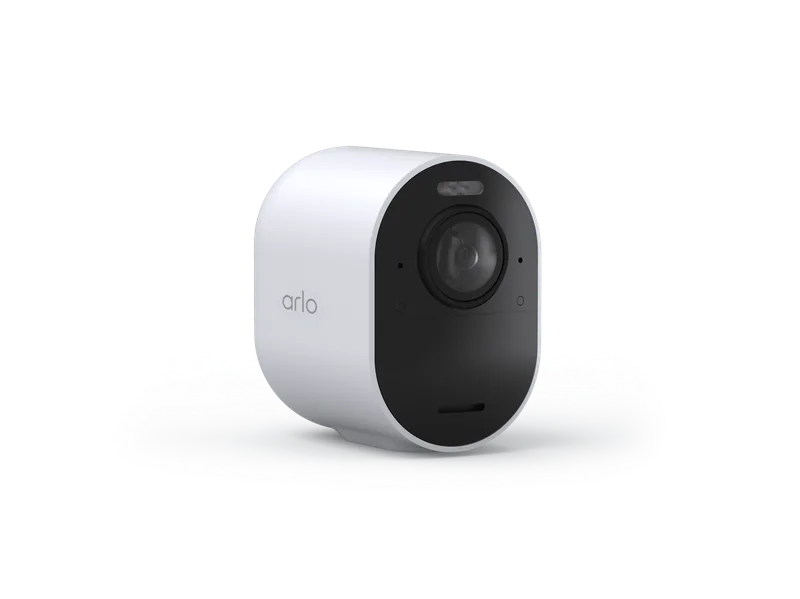
2. Arlo — Best wire-free
Why it wins: Genuinely no cables, excellent weather sealing, and the sharpest image at distance.
For a detached garage, a gate at the end of a drive, or anywhere without power, Arlo remains the best answer. Housings survive weather well and 4K resolves faces at distances other cameras cannot.
Add solar panels to anything awkward to reach. It converts a recurring chore into a fit-and-forget install.
What we like
- Best true wire-free hardware and weather sealing
- Up to 4K with colour night vision
- Solar accessories remove recharging
What to watch
- Subscription effectively required
- Cold weather reduces battery life sharply
- Higher running cost than local storage
3. Eufy — Best without a subscription
Why it wins: Months of battery life, local recording, and on-device detection that keeps working when broadband drops.
Eufy’s outdoor cameras hold up well over multiple winters and cost nothing to run. On-device AI filtering means fewer wake-ups, which is also why the batteries last so long.
What we like
- No subscription and local storage
- Class-leading battery life outdoors
- On-device detection works offline
What to watch
- HomeBase theft means footage loss
- 2023 cloud-upload disclosure
- Less sharp than Arlo at distance
4. Ring — Best floodlight camera
Why it wins: The most refined floodlight camera available, and the cheapest route to cameras plus alarm monitoring.
Ring’s floodlight camera is the one to buy if you want light and coverage in one unit at a driveway or side return. Motion-triggered lighting is a genuine deterrent in its own right, independent of the camera.
What we like
- Best floodlight camera in the category
- Widest range of outdoor form factors
- Unlimited cameras plus monitoring on one plan
What to watch
- No recording without a subscription
- No local storage
- Footage stored with Amazon
What IP ratings actually mean
Manufacturers quote IP ratings as though they were a grade. They are two separate numbers, and only the second one concerns water.
| Rating | Protects against | Suitable for |
|---|---|---|
| IP54 | Dust ingress limited; splashing water | Sheltered porches only |
| IP65 | Dust-tight; low-pressure water jets | Most outdoor positions |
| IP66 | Dust-tight; powerful water jets | Exposed walls, driving rain |
| IP67 | Dust-tight; immersion to 1m | Anywhere, including flood-prone spots |
Anything below IP65 belongs under a porch. Note too that IP ratings say nothing about UV resistance or temperature range — cheap plastics go brittle and yellow after two or three summers regardless of their water rating.
Cold weather is the real battery killer
Lithium cells lose a substantial share of usable capacity below freezing. A camera advertised at four months of battery life can need recharging every three or four weeks in a genuine winter.
This surprises people every year, so plan for it:
- Buy a spare battery per camera so you swap rather than wait for a charge.
- Fit solar panels where you can. Even weak winter sun offsets a meaningful share of the drain.
- Tighten activity zones before winter. A camera watching a busy pavement wakes constantly; excluding the pavement can double winter runtime.
- Use wired cameras where power exists. Cold does not affect them.
Lighting matters more than the camera
An unremarkable camera in a well-lit area produces more useful footage than an excellent camera in darkness. Infrared night vision gives you a monochrome image with no clothing colour, no vehicle colour, and limited facial detail.
Motion-activated floodlighting solves two problems at once: it produces colour footage, and the light itself is a deterrent — an intruder illuminated suddenly usually leaves.
If your budget is limited, spending part of it on lighting rather than all of it on a sharper sensor is usually the better decision.
Frequently asked questions
What IP rating do outdoor cameras need?
IP65 is the practical minimum for unsheltered positions; IP66 for walls exposed to driving rain. IP54 is porch-only.
Do battery cameras work in winter?
Yes, but expect substantially reduced life — sometimes a quarter of the advertised figure. Buy spare batteries, fit solar panels, and tighten activity zones before winter.
Are floodlight cameras worth it?
Usually yes. The light produces colour footage instead of monochrome infrared, and sudden illumination is a genuine deterrent on its own.
How do I stop spiders triggering my camera?
Wipe the housing regularly, avoid mounting directly under eaves where webs form, and keep infrared illuminators clean — the light attracts insects, which attract spiders.