In this local guide
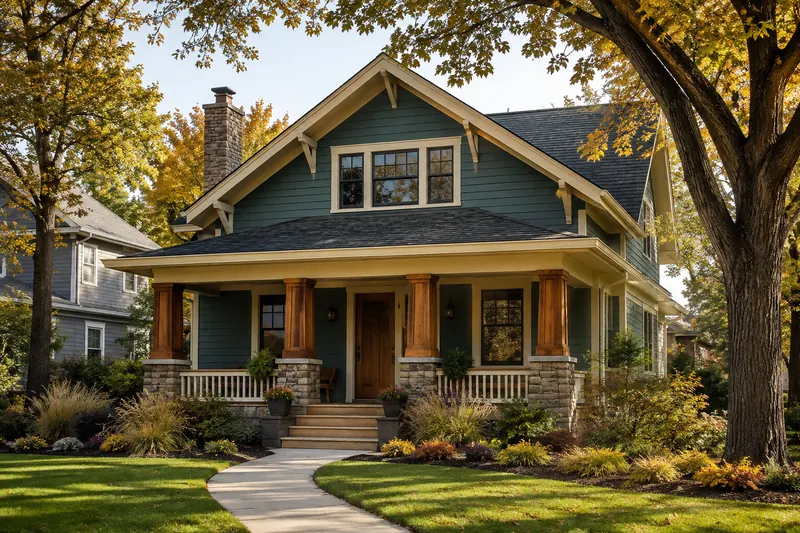
Des Moines has a mix of housing that makes smart home work genuinely variable: pre-war homes in Sherman Hill and Beaverdale with knob-and-tube legacies and no neutral wires, mid-century stock across the older suburbs, and new construction out toward Waukee, Ankeny and Grimes where everything is straightforward.
Which of those you live in changes the advice considerably, so it is worth being specific rather than generic.
What Des Moines housing stock means for your project
Older homes (roughly pre-1960). Two issues come up repeatedly. First, no neutral wire at switch boxes, which rules out most smart switches — this is precisely why Lutron gets specified here, since its dimmers work without one. Second, no C-wire at the thermostat, which most smart thermostats need. ecobee includes a Power Extender Kit that resolves it in most systems.
Plaster and lath walls are common in the older neighbourhoods, and they attenuate wireless signal considerably more than plasterboard. A system that works fine in a new build may need a repeater in a 1920s foursquare. Any installer who does not raise this has not worked on many Des Moines homes.
Newer construction in the western suburbs is generally uncomplicated: neutral wires present, C-wires present, plasterboard walls, and often structured cabling already run. DIY installation is genuinely easy in these homes.
Basements. Almost universal here, and worth two thoughts: they are a real entry point via egress windows, and they are the obvious place for a local storage hub — put it somewhere non-obvious rather than by the stairs.
What a cold winter does to your equipment
This is the single most under-discussed factor in northern markets, and it catches people out every January.
Battery cameras lose a large share of capacity below freezing. A camera advertised at four months can need recharging every three or four weeks in a real winter. If a camera is mounted somewhere awkward to reach, that becomes a genuine problem in February.
Adhesive sensors fail on cold surfaces. Adhesive needs a surface above roughly 10 °C to bond properly. Sensors mounted on a cold window frame will hold for a few weeks and then drop off. Warm the frame with a hairdryer first, or install during milder weather.
Doorbell transformers struggle in the cold. An older 10 VAC transformer that just about drives a video doorbell in summer often cannot in winter, producing intermittent operation that is maddening to diagnose.
What to do about it: use wired cameras wherever mains power exists; fit solar strips to battery cameras, which help even in weak winter sun; buy a spare battery per camera so you swap rather than wait; and tighten activity zones before winter, since a camera watching a busy street wakes constantly and drains far faster.
Alarm permits and false alarm fines
Most US municipalities require a permit to operate a monitored alarm system, and charge fines for repeated false alarms. Des Moines is no exception, though the specifics change from time to time.
What to check before your system goes live:
- Whether an alarm permit is required and what it costs annually. This is usually handled by the police department or a city licensing office.
- The false alarm fine schedule. Typically the first one or two are free, then fines escalate — commonly from around $50 into the hundreds for repeat incidents within a year.
- Whether verified response applies. Some jurisdictions deprioritise or decline dispatch to unverified alarms because of high false-alarm rates. Where that is the case, verification features — a monitoring agent who can see a camera, or on-device video analytics — matter considerably more than they otherwise would.
The practical consequence is that a well-tuned system saves you money. Most false alarms come from entry delays that are too short, motion sensors pointed at heat sources, or pets triggering non-pet-immune detectors. Getting that right at installation is worth more than any equipment upgrade.
Checking an installer is legitimate
Alarm installation is a licensed trade in most states, and the licensing exists for good reason — installers have access to your home and to the system protecting it.
Four checks worth five minutes:
- Ask for the licence number and verify it with the state licensing board directly, rather than trusting a certificate on a website.
- Ask for proof of liability insurance and check it is current. A professional produces this without hesitation.
- If they represent a national brand, ask whether they are that company or an authorised dealer. Much national-brand installation is carried out by independent local businesses. The monitoring is consistent; the installation experience is not. Research the dealer by its own name.
- Get the full multi-year total in writing before signing — equipment, financing, monitoring, fees, and what the rate becomes after any promotional period.
Every installer in our network is individually vetted for licensing and insurance rather than by brand affiliation, which is the part homeowners find hardest to do themselves.
What we would suggest for a typical Des Moines home
For a three-bedroom home in the metro, a sensible baseline:
| Element | Suggestion | Why |
|---|---|---|
| Alarm system | SimpliSafe or Ring | No contract, works well in mixed housing stock |
| Monitoring | Professional, ~$20/mo | Winter storms and outages make cellular backup worthwhile |
| Doorbell | Wired if transformer allows | Battery doorbells struggle in January |
| Cameras | Wired where power exists | Cold destroys battery runtime |
| Thermostat | ecobee with room sensors | Older homes here heat very unevenly |
| Lighting | Lutron Caséta | Works without a neutral wire |
Basement egress windows deserve sensors, and a water sensor near the sump pump is cheap insurance in a market where basement flooding is a real and recurring problem.
When you actually need a professional here
Being honest about this matters more than generating leads.
You probably do not need one if you are in newer construction, want a wireless alarm and a doorbell, and are comfortable with a screwdriver. Our DIY guide covers it, and you will save several hundred dollars.
You probably do if you are in an older home with plaster walls and no neutral wires; you want hardwired cameras; you need a C-wire run; the property is over roughly 2,500 sq ft; or you want motorised shades measured and fitted.
If you are unsure which category you are in, a free consultation will tell you in fifteen minutes — including if the answer is that you can do it yourself.
Frequently asked questions
Do I need a permit for a home security system in Des Moines?
Most municipalities require an alarm permit for monitored systems and fine repeated false alarms. Confirm current requirements and fees directly with the city, as these change. A reputable installer will raise it before you sign.
Will a smart thermostat work in an older Des Moines home?
Usually, but many pre-1960 homes lack a C-wire. ecobee includes a Power Extender Kit that works around this in most systems. Photograph your thermostat wiring before ordering.
Do battery cameras work through an Iowa winter?
They work, but expect substantially reduced life — sometimes a quarter of the advertised figure. Use wired cameras where power exists, fit solar strips, and keep spare batteries.
How much does security installation cost in Des Moines?
Labour typically runs $75–$150 an hour, in line with national ranges. A wireless system setup is $100–$300; wired cameras $150–$400 each. See our installation cost guide.
Is the quote really free?
Yes. We are paid a referral fee by the installer, not by you, and there is no obligation to buy anything. See our disclosure.